
Wholesale Sweatshirts with 100-Unit MOQs
Develop fit-focused wholesale sweatshirts from XS–3XL with OEM, ODM and private-label support, from sampling through global production.
Featured Products for wholesale sweatshirts Development
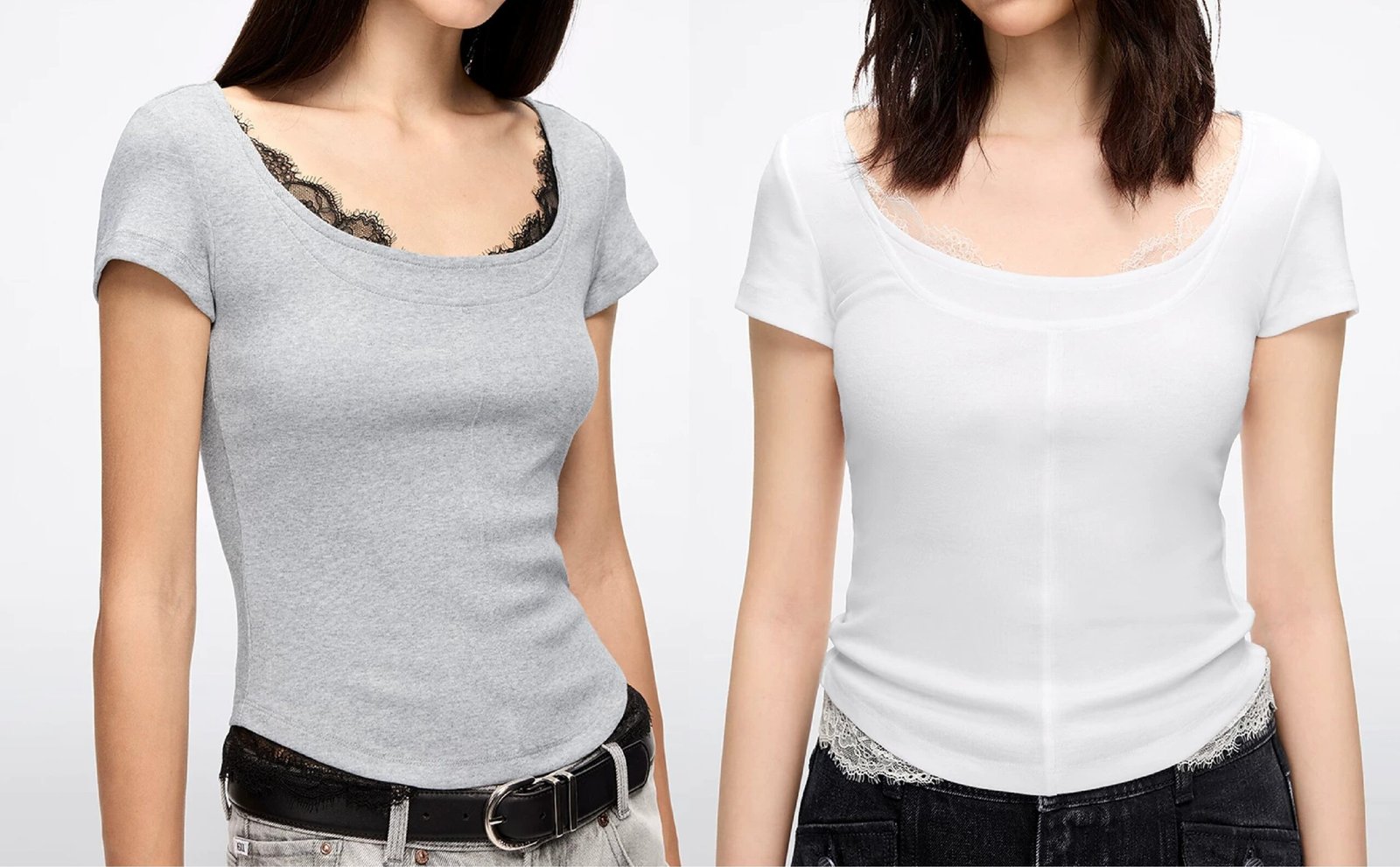


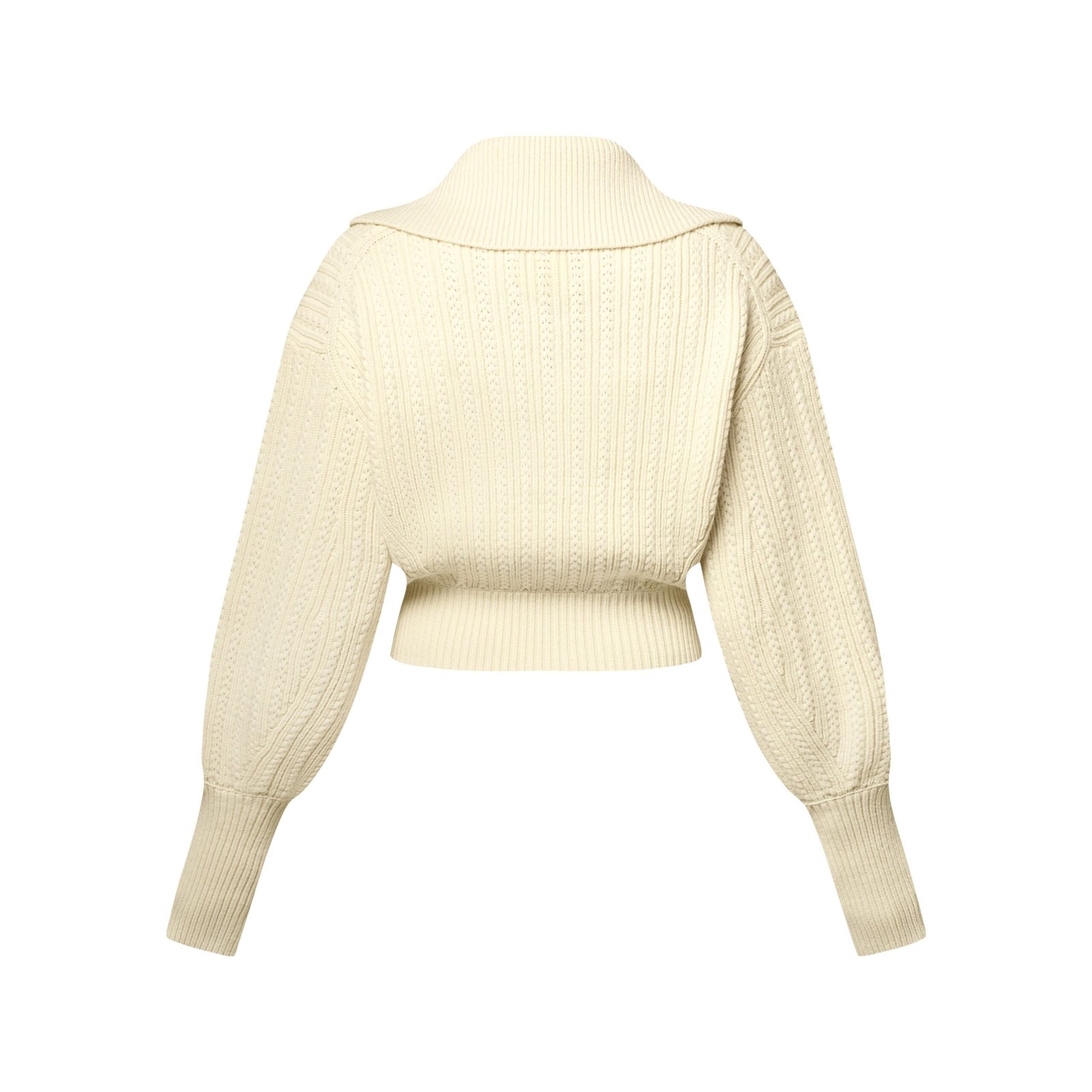


Related Product Catalogue and Quotation


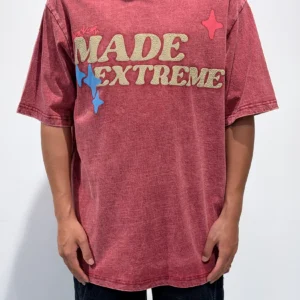


Why Brands Source Wholesale Sweatshirts from JUNSHEEN
Integrated development, dependable production, and export-ready support for sweatshirt programs that need consistent fit and room to scale.
100-Unit MOQ
Launch wholesale sweatshirts from 100 units per style and color, making capsule collections and controlled market testing more practical.
Fit-Focused XS–3XL
Pattern makers refine proportions, mobility, and grading increments for standard, extended-size, plus-size, and oversized sweatshirt fits.
Integrated Decoration
Coordinate embroidery, screen printing, DTF, puff effects, washes, and finishing within one manufacturing workflow for clearer quality control.
Scalable Production Capacity
More than 200 skilled workers and 80,000-plus monthly units support repeat wholesale sweatshirt orders as your demand grows.
Private-Label Ready
Build a cohesive retail presentation with custom labels, hang tags, drawstrings, trims, branded packaging, and production-ready specifications.
Global Export Support
From bulk quality checks to packed-goods coordination, JUNSHEEN helps global brands move approved sweatshirt orders toward shipment with confidence.
Sweatshirts & Casualwear Manufacturing
Develop coordinated casualwear programs with one supplier for fit, materials, decoration, private labeling, and scalable production from 100 units per style and color.
Custom Hoodies
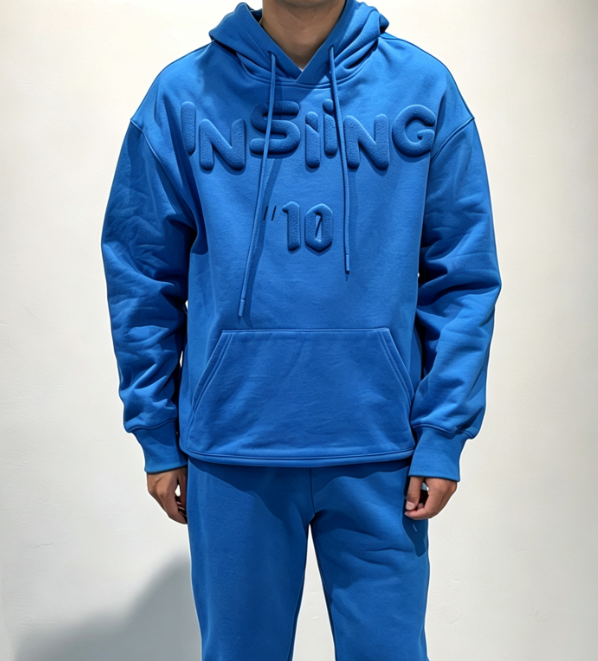
Develop custom hoodies in fleece, French terry, or jersey with refined body proportions, hood construction, rib trims, and logo decoration. Junsheen supports XS–3XL grading, wash testing, custom labels, and low-MOQ capsule or wholesale production.
Request a Quote
Custom T-Shirts
Build custom T-shirts around the correct fabric weight, hand feel, neckline, and silhouette for your market. Choose combed cotton, blends, oversized or fitted blocks, then add screen print, DTG, embroidery, labels, and branded packaging.
Request a Quote
Custom Jeans
Produce custom jeans with controlled denim weight, stretch recovery, rise, leg shape, wash effects, and size grading. From fashion straight legs to extended-size fits, Junsheen manages pattern development, hardware, embroidery, distressing, and bulk quality control.
Request a Quote
Custom Sweaters
Source turtle neck sweater bulk programs with yarn, gauge, collar height, and body balance matched to your target price and season. Junsheen develops knitted samples, grades sizes through 3XL, and supports private labels, trims, and repeat production.
Request a Quote
Custom Jackets
Develop custom jean jackets with the right denim structure, seam durability, fit balance, and branded hardware. Junsheen supports classic, cropped, oversized, and lined constructions, plus washes, patches, embroidery, labels, and coordinated denim programs.
Request a Quote
Custom Sweatshirts & Crewnecks
Create custom crewneck hoodie and sweatshirt styles with consistent neckline, shoulder shape, rib recovery, and fabric weight. Junsheen produces crewnecks, hooded sweatshirts, and oversized blocks in fleece or French terry, with printing, embroidery, washes, and private-label finishing.
Request a Quote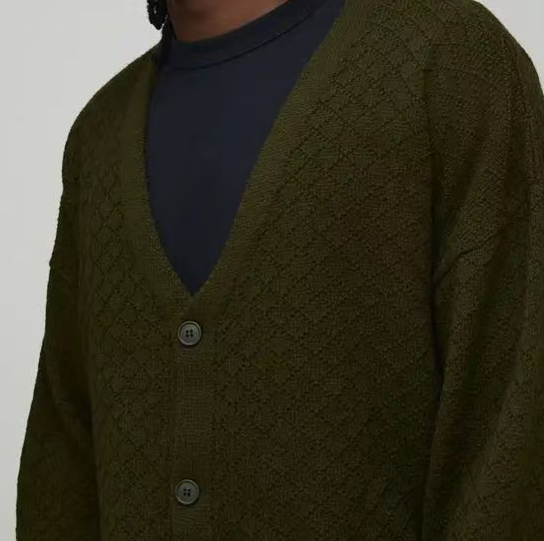
Custom Cardigans
Produce custom cardigans with knit structures, button choices, gauge, and fit proportions suited to your collection. The team supports regular, oversized, and extended-size grading, sampling yarn options, and integrating custom labels, patches, and branded packaging.
Request a Quote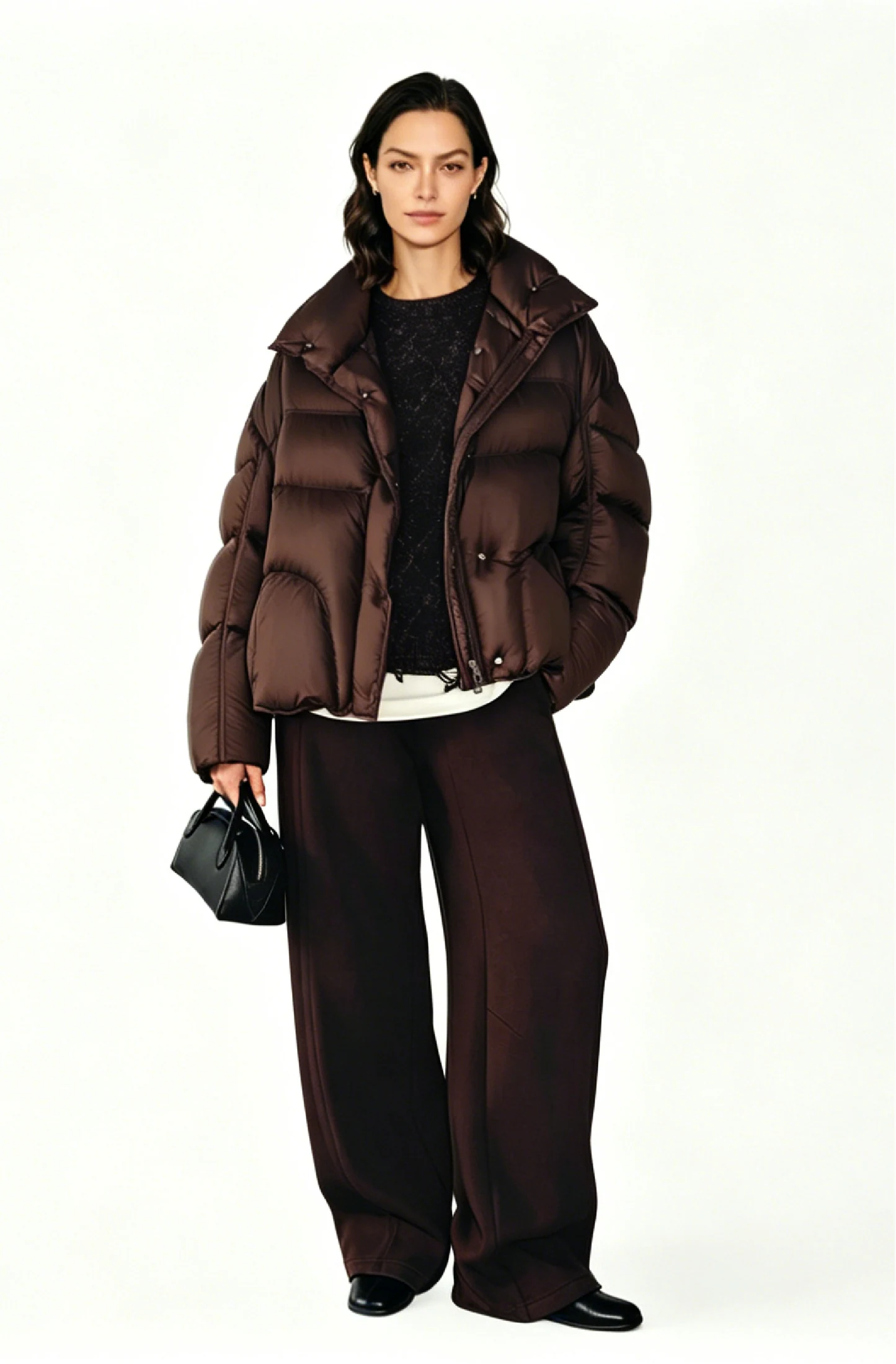
Custom Puffer & Down Jackets
Develop custom puffer jackets with insulation selection, shell fabric, quilting layout, zipper performance, and bulk packing requirements defined early. Junsheen supports fashion and functional outerwear development, including custom trims, labels, reflective details, and scalable export production.
Request a Quote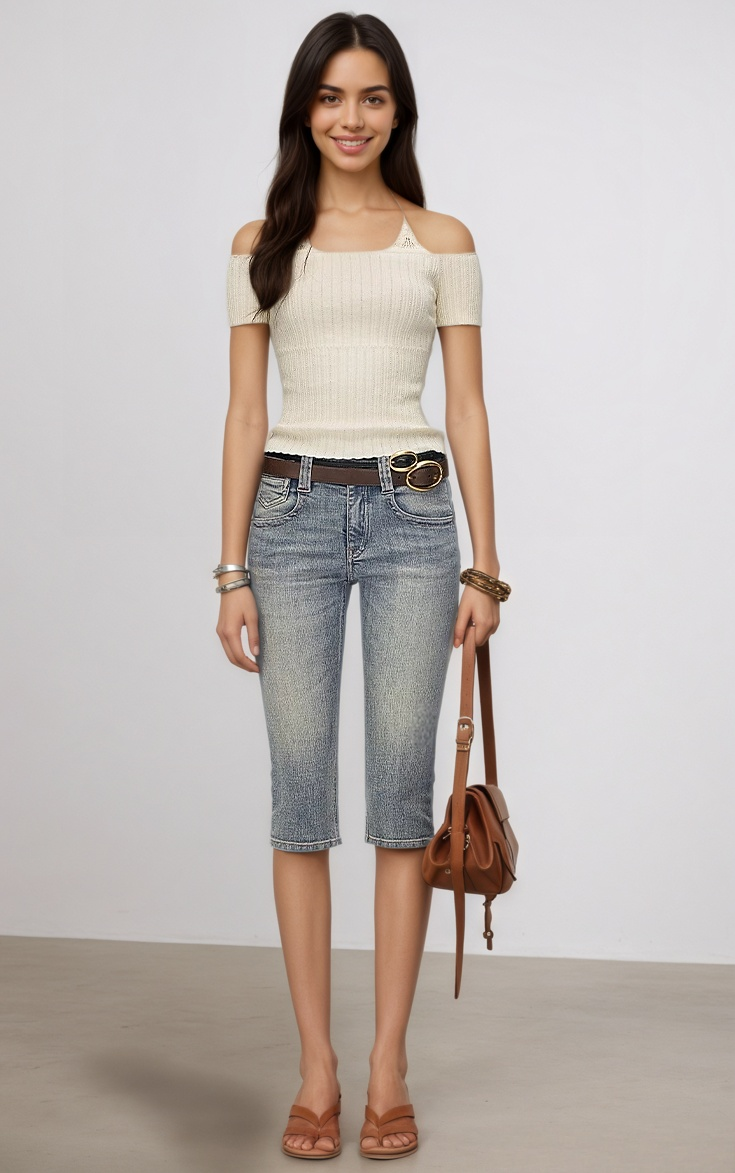
Custom Denim Shorts
Produce custom jean shorts with controlled inseams, rise, hem treatment, stretch, and wash results across the size range. Junsheen develops women’s, men’s, and unisex denim shorts, with distressing, embroidery, branded hardware, and coordinated jean programs.
Request a Quote
Custom Sweater Dresses
Create custom sweater dresses with yarn selection, knit gauge, length, stretch, and body shaping engineered for reliable fit. Junsheen supports fitted, relaxed, and oversized silhouettes from XS–3XL, with sample approval, private labeling, and consistent repeat orders.
Request a Quote
Custom Denim Sets
Build mens denim suits wholesale programs with coordinated jacket and trouser fits, matching denim lots, and reliable wash consistency. Junsheen develops two-piece denim sets from sketches or reference samples, then manages hardware, labels, quality checks, and bulk delivery.
Request a Quote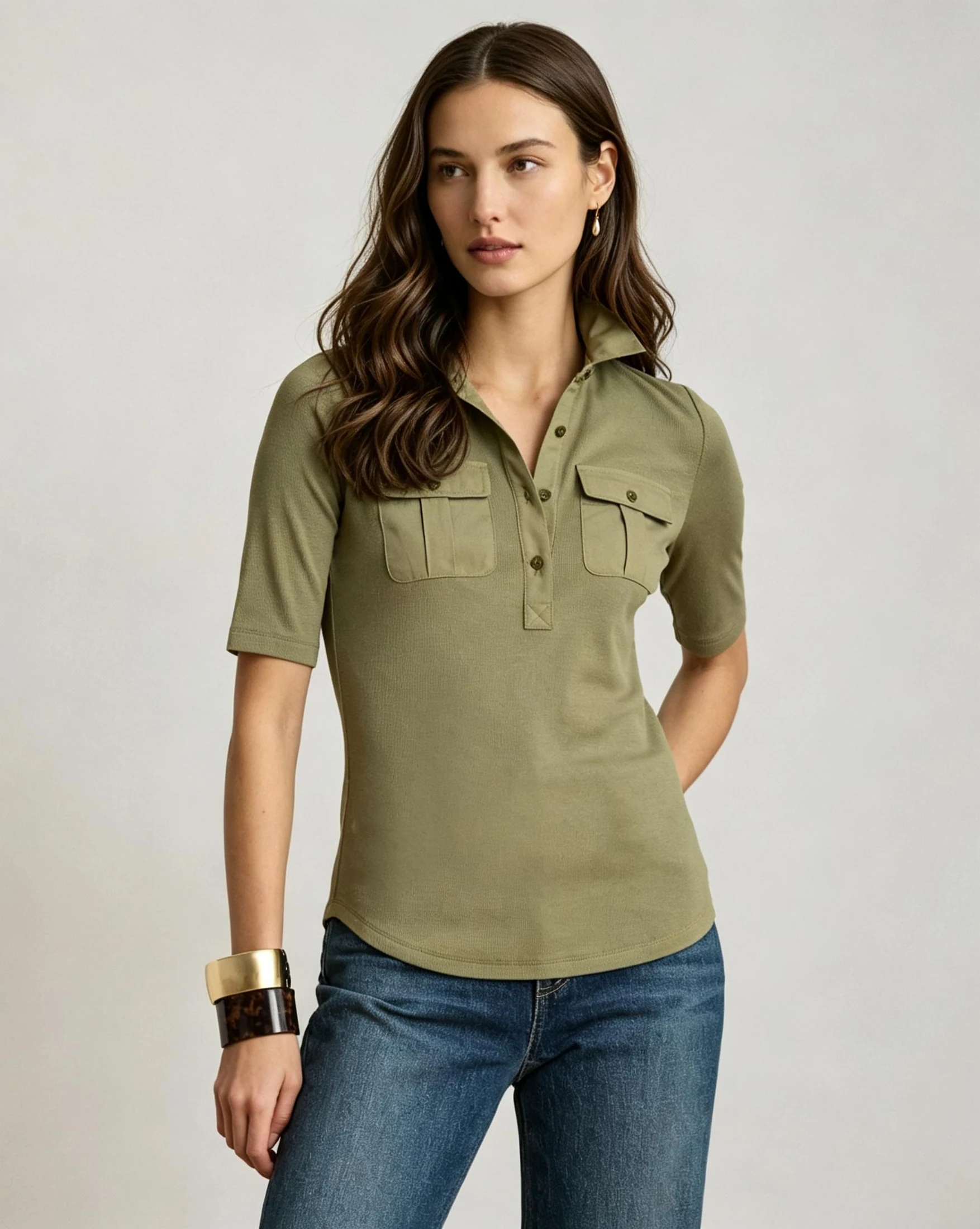
Custom Polo Shirts
Develop custom polo shirts with collar stability, placket construction, fabric performance, and logo placement suited to retail or uniform programs. Choose pique, jersey, or performance knits, then add embroidery, printing, labels, size grading, and branded packaging.
Request a Quote
Custom Sweatpants
Produce custom sweatpants with the right rise, leg shape, waistband recovery, pocket construction, and fleece weight. Junsheen supports matching sets with hoodies or crewnecks, plus XS–3XL grading, custom drawcords, embroidery, printing, and wash finishes.
Request a Quote
Custom Shorts
Develop custom shorts for casualwear, active-inspired, denim, or woven programs with fit and movement considered from the first sample. Junsheen manages fabric sourcing, inseam options, elastic or tailored waists, decoration, labels, and low-MOQ bulk production.
Request a Quote
Custom Pullovers
Create custom pullovers in knit, fleece, French terry, or jersey constructions with controlled necklines, sleeves, and grading. Junsheen supports quarter-zip, mock-neck, oversized, and standard styles, adding custom decoration, trims, washes, and private-label details.
Request a QuoteWholesale Sweatshirts in Fabrics Built for Your Collection

French Terry
Loopback French terry delivers a breathable, midweight hand for premium crewnecks, hoodies and transitional wholesale sweatshirts. Its unbrushed interior supports comfortable layering, clean print results and dependable shape retention after repeated washing.

Brushed Fleece
Brushed fleece has a soft, insulating inner surface suited to cold-weather sweatshirts, oversized hoodies and loungewear programs. Available in varied GSM weights, it offers warmth, a plush hand feel and a substantial finished appearance.

Cotton Jersey
Cotton jersey provides a smooth, breathable feel for lightweight sweatshirt styles, relaxed pullovers and layering pieces. Its natural stretch and soft surface work well for rib-trim constructions, screen printing and comfortable everyday wear.

Organic Cotton
Organic cotton supports elevated sweatshirt collections with a soft, natural hand and a more considered material story. We can develop jersey, French terry and fleece qualities in selected weights for private-label programs and verified fabric sourcing.

Recycled Blends
Recycled cotton and polyester blends help balance durability, cost control and sustainability goals for wholesale sweatshirts. These fabrics can be engineered for fleece or terry constructions, with stable recovery, consistent color performance and reliable bulk availability.

Performance Knits
Performance knits add moisture management, stretch and resilient recovery to active-inspired sweatshirts and travel layers. Blended yarn systems can be specified for lighter weights, flexible movement and a smooth technical hand that holds up to frequent wear.
Wholesale Sweatshirts: Decoration and Finishing Options

Logo Embroidery
Flat, 3D puff, chain-stitch, and patch embroidery add tactile dimension and durable brand detail. Our team matches stitch density, backing, and placement to sweatshirt weight for a clean, long-lasting finish.

Screen Printing
Plastisol and water-based screen printing deliver bold, consistent artwork for wholesale sweatshirt runs. Choose soft-hand, opaque, or layered color results with dependable wash performance across fleece and French terry fabrics.

DTF and DTG
DTF and DTG printing support detailed artwork, gradients, and short-run color complexity without compromising visual clarity. We assess fabric composition and artwork requirements to select the process with the best hand feel.

Appliqué Details
Appliqué combines fabric layers, embroidery, and precise edge finishing to create elevated varsity, collegiate, or streetwear graphics. The result is dimensional branding with reinforced construction designed for repeated wear and washing.

Specialty Print Effects
Puff, flocking, silicone, high-density, foil, discharge, and reflective effects create distinctive surface contrast. These techniques give custom sweatshirts a premium visual identity while maintaining controlled adhesion and production consistency.

Garment Washes
Enzyme washing, garment dyeing, acid wash, brushing, napping, and anti-pilling treatments refine color, softness, and character. We sample each finish to confirm the intended vintage look, hand feel, and durable post-wash result.
Custom Trims, Labels and Packaging for Wholesale Sweatshirts

Custom Drawcords
Specify cotton, flat, round, tipped, reflective or contrast drawcords for hoodie wholesale sweatshirts. Junsheen matches cord weight, color and end treatment to the fabric, silhouette and intended retail position.

Branded Zippers
Add custom zipper pulls, metal or nylon teeth, coated finishes and logo details to zip-up sweatshirt styles. We help select reliable closures suited to garment weight, wash requirements and your target cost.

Rib Trim Sets
Coordinate cuffs, waistbands and collar ribs in matching, contrast or striped knit constructions. Proper rib recovery and proportion help wholesale sweatshirts retain shape through wear, washing and repeat production.

Woven Brand Labels
Apply woven main labels, size labels and wash-care labels with your logo, fiber information and placement requirements. Private-label labeling gives each sweatshirt a finished brand identity from sample through bulk delivery.

Custom Hang Tags
Create branded hang tags with custom stock, printing, string, barcodes and product messaging for retail presentation. Tags can be packed individually or attached during finishing to streamline your receiving and merchandising process.
Branded Packaging
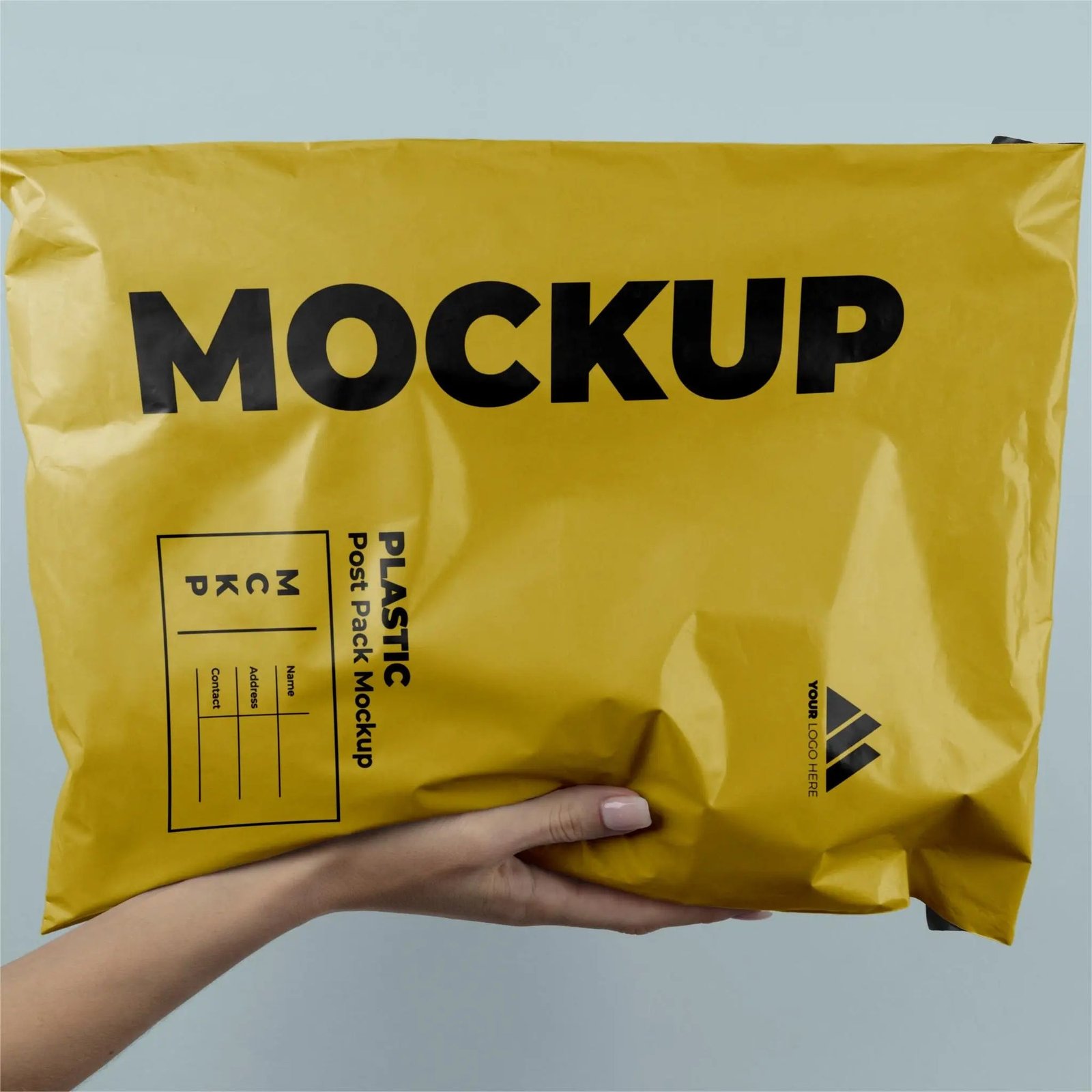
Complete your program with logo polybags, folding instructions, size stickers, tissue paper or custom cartons. Junsheen coordinates packaging specifications to protect garments during global shipment and support a consistent unboxing experience.
About JUNSHEEN Wholesale Sweatshirts
Founded in 2010 in Humen Town, Dongguan, JUNSHEEN helps fashion brands turn sweatshirt concepts into production-ready collections. We provide OEM, ODM, private-label and wholesale sweatshirt manufacturing, combining development guidance, fabric sourcing, sampling and export support in one responsive supply chain.
Our 200+ skilled workers support monthly production above 80,000 units, from 100-unit wholesale sweatshirts launches by style and color to repeat bulk programs. Cut-and-sew, knitting, decoration, washing, labels, trims and packaging are coordinated in-house for clearer control of quality and delivery.
More than 2,000 fashion-brand clients have sourced with JUNSHEEN across global markets. What distinguishes our approach is fit-focused development from XS to 3XL: patterns are graded for proportion, mobility and consistent wear, helping brands build reliable sweatshirt ranges as their business grows.

Wholesale Sweatshirts Built for Better Fit
Fit-First Pattern Development
JUNSHEEN develops wholesale sweatshirts from XS to 3XL with grading that considers shoulder balance, sleeve length, body proportion and mobility. Our team refines each size instead of simply scaling one base pattern, helping reduce sample revisions before bulk approval.
- Normal, oversized, extended-size and plus-size development
- Patterns created from tech packs, sketches or reference garments
- Prototype samples, size sets and pre-production fit approval
- 100-unit MOQ per style and color

Fabric Matched to Your Brief
Select sweatshirt materials around the hand feel, weight, drape, durability and target cost your collection requires. Through established supplier networks, JUNSHEEN sources fleece, French terry, jersey and recycled options, with swatches and samples available before bulk confirmation.
- French terry, brushed fleece and cotton-blend options
- Fabric weight and wash-performance recommendations
- Swatches and sample garments for material review
- Sourcing support for capsule and scalable bulk programs

Decoration Finished In-House
Bring brand direction into production with coordinated embroidery, printing, washing and finishing for custom sweatshirts. Managing these processes within one supply chain helps align artwork, placement, hand feel and quality standards from approved sample through packed goods.
- Flat, 3D/puff and chain-stitch embroidery
- Screen print, DTF, DTG, silicone and high-density effects
- Garment dye, acid wash, brushing and anti-pilling finishes
- Custom labels, hang tags, trims and branded packaging

Repeat Orders Stay Consistent
JUNSHEEN retains approved patterns, graded size sets and material records to support dependable reorders as demand grows. With 200+ skilled workers and monthly capacity above 80,000 units, we can move proven sweatshirt programs from replenishment to ongoing production.
- Retained development records for faster repeat orders
- Incoming, in-line and final packed-goods inspections
- Capacity for 80,000+ units per month
- Global export support for 2,000+ fashion-brand clients

Why Choose JUNSHEEN for Wholesale Sweatshirts
Fit-focused development, integrated production, and scalable export support for every sweatshirt program.
← 左右滑动查看 →
Wholesale Sweatshirts From Sourcing to Global Shipment
A clear, fit-focused production path from feasibility review through quality-controlled export delivery.
Review Project Feasibility
Our team reviews your tech pack, reference garment, size range, decoration requirements, target cost, and 100-unit MOQ to define a production-ready sweatshirt plan.
Source Materials and Sample
We recommend fleece, French terry, jersey, ribs, trims, and labels, then develop patterns, grading, and approval samples for your selected fit and finish.
Cut, Sew, and Decorate
Approved materials move into cutting and sewing, followed by in-house embroidery, printing, washing, or finishing with specifications tracked throughout bulk production.
Inspect Quality and Fit
In-line checks monitor construction, measurements, decoration, and workmanship; final inspection verifies packed wholesale sweatshirts against approved samples and order specifications.
Pack and Export Globally
We apply private-label packaging, confirm final balances, prepare export documentation, and coordinate shipment support for reliable delivery to your destination market.
How to Start Your Wholesale Sweatshirts Project
Move from concept to scalable production with clear technical review, sampling and approval at every stage.
Share Your Concept
Send a tech pack, sketch, reference garment or mood board with target quantities, sizing, fabric preferences, decoration details and destination market.
Review Feasibility
Our team assesses construction, fit-focused XS–3XL grading, materials and embellishments, then recommends practical adjustments for sampling, cost control and production.
Approve Your Sample
Review prototype samples, fabric swatches and size-set details to confirm fit, hand feel, measurements, branding and finishing before bulk materials are committed.
Confirm Your Quotation
Approve the final specification, pricing, MOQ and production schedule. Junsheen supports orders from 100 units per style and color.
Launch Bulk Production
We manage fabric sourcing, cut-and-sew production, decoration, quality control, branded packaging and global export support for dependable scalable delivery.
Custom Clothing Manufacturer Credentials and Compliance Documents




Wholesale Sweatshirts Results from Global Apparel Programs
JUNSHEEN refined the shoulder and sleeve grading across our XS–3XL sweatshirt range. We approved the size set after one revision and launched our 600-unit capsule on schedule, with noticeably fewer fit-related customer returns.
Our first 120-unit colorway met the MOQ we needed to test demand. The team matched our French terry hand feel, completed custom puff-print samples in 18 days, and helped us reorder three additional colors within the season.
We moved a growing wholesale program to JUNSHEEN because they could manage embroidery, labels, packaging, and export in one workflow. Our monthly order volume scaled from 800 to 4,000 sweatshirts while keeping delivery windows reliable.
Wholesale Sweatshirts FAQ
Clear answers on MOQs, development, pricing, production, and global delivery for custom sweatshirt programs.
What is the MOQ for wholesale sweatshirts?
Can I order custom wholesale sweatshirts with my own logo and labels?
How long does wholesale sweatshirt sampling and bulk production take?
What information do you need to quote a sweatshirt order?
Can you develop plus-size and oversized wholesale sweatshirts from XS to 3XL?
What payment terms do you offer for first-time apparel orders?
Do you arrange international shipping for wholesale sweatshirts?
How do you protect my designs and brand information?
The Complete Buyer’s Guide to wholesale sweatshirts
Use this practical framework to select styles, fabrics, decoration methods, and reliable suppliers for wholesale sweatshirts—while avoiding quality, costing, MOQ, sampling, and production mistakes that can weaken your collection.
1. What Are wholesale sweatshirts?
100 units per style and color is a practical starting point for custom wholesale sweatshirts, while blank-stock programs may be purchased by the carton or in mixed sizes. The term covers B2B sweatshirt purchasing for retailers, screen printers, event teams, wholesalers, and brands—but the supply model changes the product buyers receive. 2 common routes are blank inventory and custom cut-and-sew. Blank programs use an existing body, preset fabric, colors, and size scale for fast decoration; custom production develops the silhouette, pattern, grading, fabric, rib, labels, and finishing around a collection brief. 280–360 GSM fleece or French terry may suit a core retail sweatshirt, whereas a promotional order may prioritize a proven blank, simple screen print, and short replenishment cycle. Private-label buyers normally need approved measurements, Pantone references, decoration placement, wash standards, and branded packaging before bulk commitment. XS through 3XL requires more than adding width to a base size: shoulder balance, sleeve length, body proportion, and grading increments affect sell-through and returns. A low quote is therefore incomplete unless it identifies fabric composition and weight, construction, size tolerance, trim quality, decoration method, testing needs, MOQ by color, and the approved sample standard.
2. How wholesale sweatshirts Evolved
1920s athletic departments helped establish the sweatshirt as a warm-up layer: brushed cotton fleece trapped air, while collegiate crests turned a practical uniform into visible affiliation. By the postwar period, its simple cut made it equally useful in factories, workshops and casual wardrobes, creating the durable, easy-care baseline buyers still expect. 1970s and 1980s streetwear recast the silhouette through skate, hip-hop and graphic culture, making blank panels, bold prints and logo embroidery part of the product rather than an afterthought. That shift explains why wholesale sweatshirts now need a clear decoration plan before sampling: print placement, rib proportion, shrinkage allowance and Pantone approval affect both appearance and repeatability. 2020s sourcing increasingly favors 320–500 GSM heavyweight fleece, relaxed shoulders and deliberately oversized body proportions, often finished with garment dye, enzyme wash or anti-pilling treatment for a worn-in premium hand. Buyers also face stronger expectations for traceable recycled or organic inputs and certifications such as GOTS or OEKO-TEX, while private-label labels, custom trims and fit-specific grading distinguish a collection from the same generic blank.
3. Types of wholesale sweatshirts
Six core silhouettes cover most wholesale sweatshirts assortments, but each earns its place through a distinct wearing occasion. Build around customer, layering role, and specification differences rather than releasing near-identical fleece tops.
| Silhouette | Commercial Strength | Best Customer | Layering Role |
|---|---|---|---|
| Crewneck | Low-complexity core | Brands and retailers | Mid-layer |
| Pullover hoodie | High perceived value | Casualwear shoppers | Outer mid-layer |
| Zip-up hoodie | Easy on-off wear | Travel and teamwear | Light jacket |
| Quarter-zip | Polished casual option | Contemporary retail | Collared layer |
| Oversized | Streetwear differentiation | Fashion-led labels | Statement layer |
| Cropped women’s | Focused fit offer | Women’s collections | Light layer |
Crewnecks And Hoodies
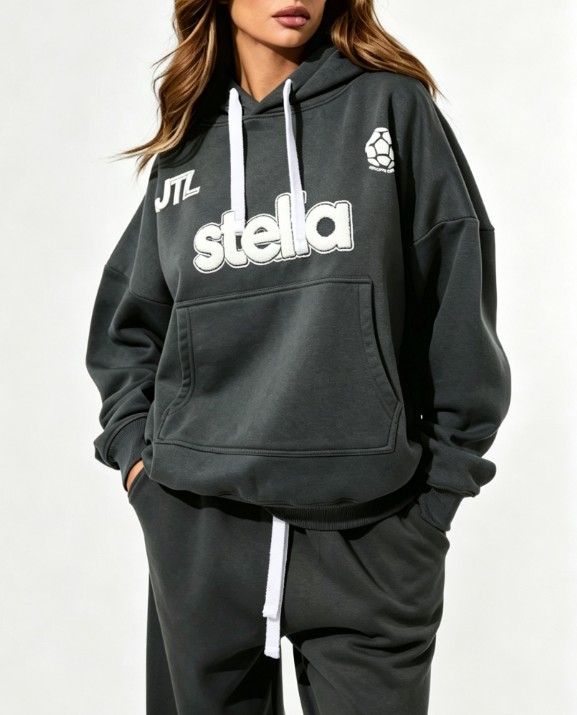
280–360 GSM crewnecks are dependable logo platforms for unisex retail, uniforms, and repeat wholesale programs. 320–450 GSM pullover hoodies add warmth and a kangaroo pocket; specify hood depth, drawcord, and rib recovery.
Zip-Up And Quarter-Zips

Full-zip hoodies suit travel, teamwear, and transitional layering because customers can regulate warmth without removing the garment. Quarter-zips read cleaner for contemporary retail; confirm zipper length, collar height, and whether a metal or nylon coil zipper fits the price point.
Oversized Streetwear Fits

2–8 cm added body width creates an oversized silhouette, but sleeve length and shoulder drop must be balanced through the graded size set. 400 GSM-plus styles target premium streetwear customers; use a clear finished-garment measurement chart to prevent fit disputes.
Cropped And Women’s Fits
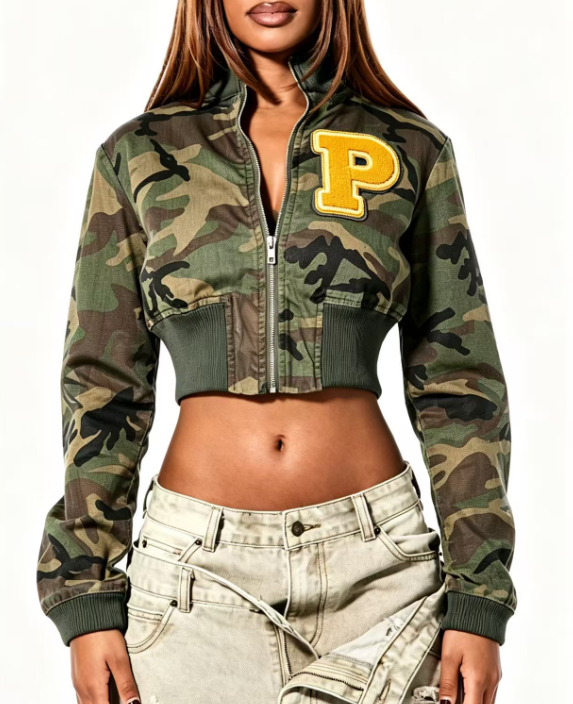
45–55 cm body lengths can create cropped women’s fits; define the intended rise and hem position with a fit sample. XS–3XL grading should adjust bust, shoulder, sleeve, and body proportions independently instead of merely enlarging one base pattern.
4. Fabrics for wholesale sweatshirts
Fabric selection sets the comfort, retail position, and wash-risk profile of wholesale sweatshirts. Specify fiber content, construction, GSM, and target hand feel together; a fabric name alone is insufficient for repeatable sourcing.
| Fabric Construction | Typical GSM | Hand Feel And Warmth | Performance | Best Market Position |
|---|---|---|---|---|
| Cotton French terry | 240–300 | Dry, substantial, breathable | Moderate shrinkage; low warmth | Premium spring casual |
| Cotton brushed fleece | 300–360 | Soft, warm, lofty | Pre-shrink; assess pilling | Autumn/winter premium |
| Cotton-poly fleece | 280–340 | Soft, stable, warm | Better recovery and drying | Core retail programs |
| Polyester performance knit | 220–280 | Smooth, lighter warmth | Fast-drying, colorfast | Active or value lines |
| Recycled blend | 260–330 | Varies by yarn mix | Verify pilling and traceability | Sustainability-led collections |
Weight And Seasonality

240–280 GSM French terry suits spring layers and premium transitional programs because its unbrushed loops breathe while retaining structure. 300–360 GSM brushed fleece delivers a warmer, loftier interior for autumn and winter, but adds drying time and bulk.
Yarn, Shrinkage, And Pilling

Ring-spun cotton gives a smoother, softer surface than open-end cotton, supporting cleaner prints and a more refined hand feel. 3–5% dimensional change is a practical pre-wash test range to manage; pre-shrunk or compacted fabric reduces size-set surprises. Anti-pilling finishes help fleece, yet abrasion testing remains essential.
Fiber Selection Priorities
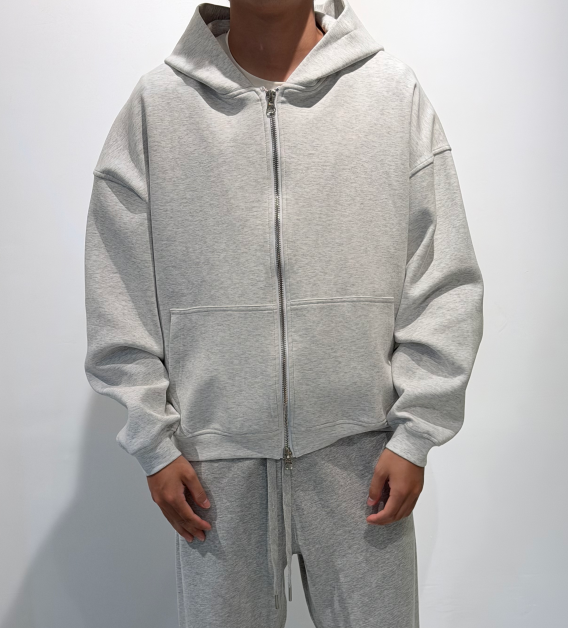
100% cotton favors natural hand feel and premium casual positioning, while polyester improves shape retention, drying speed, and color durability. 50/50 cotton-poly blends balance cost and performance; recycled cotton or recycled polyester requires documented composition and shade-consistency review before bulk approval.
5. Customizing wholesale sweatshirts
At a 100-unit starting order, select decoration before approving the sample: artwork, placement, and color count drive both cost and yield. For wholesale sweatshirts, build the label system and packaging into the same approval package.
| Method | Typical MOQ | Indicative Added Unit Cost | Margin Use |
|---|---|---|---|
| 1–2 color screen print | 100 units | US$0.60–1.80 | Best for repeat logo programs |
| Embroidery or patch | 100 units | US$1.20–3.50 | Premium crest or small logo |
| DTG or DTF transfer | 100 units | US$1.50–4.00 | Detailed multicolor artwork |
| Garment dye plus finish | 100 units | US$1.50–4.50 | Vintage capsule positioning |
Match Artwork To Method

1–2 spot-color logos suit screen print, while photographic art favors DTG or DTF heat transfer. Large chest prints need stable artwork dimensions across XS–3XL. 3D logos, appliqué, and embroidery add tactile value but increase stitch time, backing, and placement risk on fleece.
- Screen print: strongest margin for repeat graphics
- DTG: detailed, short-run multicolor artwork
- Embroidery: premium small logos and crests
- Patches: flexible branding across garment programs
Build The Private Label System

3 label touchpoints—neck print, woven main label, and wash-care label—make a blank sweatshirt retail-ready. Confirm label fold, seam allowance, fiber content, and country-of-origin requirements before bulk. 1 branded hangtag and custom mailer can elevate unboxing, but keep variable packaging costs aligned with the target retail price.
- Woven labels: durable identity at neckline
- Neck prints: low-bulk comfort alternative
- Hangtags: story, barcode, and size messaging
- Custom packaging: protect garments in transit
Use Color And Finish Deliberately
1 garment-dye program creates washed depth and individual variation; approve a sealed shade standard first. Acid wash, enzyme wash, brushing, and napping can change hand feel and print behavior. 2 placements—front chest and back—usually control labor better than all-over decoration. Test dye migration and embroidery puckering on the actual fleece.
- Garment dye: vintage color and softer character
- Appliqué: collegiate texture with controlled colors
- Heat transfer: precise small placements and names
6. Construction Details That Signal Quality
Quality becomes visible after the first wash, when seams, ribs, and reinforcements—not fabric weight alone—determine whether a sweatshirt keeps its shape. For wholesale sweatshirts, specify these construction points in the tech pack and inspect them on the approved sample.
Stitching And Stress Points
8–10 stitches per inch is a practical baseline for sweatshirt seams; loose or uneven stitching can open under stretch. Inspect matching seam allowances, clean overlock coverage, and consistent topstitch spacing. 2-needle coverstitching at hems and cuffs adds durability and a cleaner exterior. Shoulder seams benefit from twill tape or clear elastic stabilization, especially on oversized styles that carry more weight.
- Check armhole, pocket corners, and side-seam intersections
- Require bartacks at pocket and zipper stress points
- Compare left and right seam alignment
Ribs, Hoods, And Hardware

1×1 or 2×2 cotton-elastane rib should recover after being stretched; weak ribbing leaves cuffs and waistbands wavy. Confirm rib weight, elastane percentage, and relaxed measurements against the specification. 2-panel or 3-panel hoods should sit symmetrically around the face without a twisted center seam. For zip styles, test zipper travel, tape flatness, puller attachment, and drawcord ends before bulk approval.
- Check hood opening against the intended fit
- Match drawcord length and eyelet placement
- Specify branded, metal, or coated hardware clearly
Neck Finish And Wash Tests
12–15 mm neck tape covers the back-neck seam and reduces irritation while reinforcing a high-stress area. Verify that labels sit flat and that collar rib joins cleanly at the shoulder. 3–5 wash-and-dry cycles on the pre-production sample reveal torque, pilling, seam puckering, color loss, and dimensional change. Record chest, body length, sleeve length, and rib recovery before and after testing to control fit-related returns.
- Wash using the intended care-label method
- Review appearance under normal daylight
- Approve tolerances before cutting bulk fabric
7. Choosing a wholesale sweatshirts Manufacturer
A dependable wholesale sweatshirts manufacturer proves capability before the purchase order, not after it. Evaluate the factory against your exact fabric, fit, decoration, quantity, destination, and delivery requirements.
| Claim | Question | Proof To Review |
|---|---|---|
| Fabric sourcing | Can you reserve the approved lot? | Swatch, composition, weight, shade band |
| Quality control | What defects trigger rework? | Inspection report and approved sample |
| Communication | Who approves changes? | Named contact and written timeline |
| Export reliability | Which documents accompany shipment? | Invoice, packing list, origin documents |
Match Product Experience
100-unit capsule orders need different controls than 10,000-unit replenishment programs. Ask for comparable sweatshirt samples: French terry or fleece weight, rib recovery, print method, and extended-size grading. 2 reference samples should be measured after washing against the approved spec. Confirm neck shape, shrinkage, pilling, seam twisting, and decoration adhesion rather than judging appearance alone.
- Request comparable factory-made samples
- Check post-wash measurements
- Review fit across the size set
Verify Development And MOQ
100 units per style and color can suit a launch, but verify whether fabric, color, and decoration minimums are higher. Ask who owns pattern corrections, grading, size-set approval, and pre-production samples. 1 signed tech pack, Pantone callout, measurement chart, and approval sample should govern bulk production. Written revision dates prevent an obsolete sample becoming the factory reference.
- Clarify MOQ by color and fabric
- Approve a graded size set
- Lock specifications before deposit
Audit Controls And Delivery
3 checkpoints—incoming fabric, in-line sewing, and final packed-goods inspection—should be documented. Request inspection records, fiber-content test reports where relevant, certification scope and validity, and an AQL plan; OEKO-TEX, GOTS, WRAP, or BSCI claims require current certificates. 80,000 monthly units is meaningful only when capacity is available during your production window. Ask for the production schedule, export packing list, commercial invoice, shipping terms, and destination-specific labeling guidance.
- Confirm active certification scope
- Request an AQL inspection plan
- Validate export documents before shipment
8. Mistakes wholesale Sweatshirts Buyers Make
A 100-unit MOQ makes sweatshirt sourcing accessible, but it does not remove production risk. Most missed launch dates trace to decisions made before the first approved sample.
Buying On Price Alone
A $1 lower unit quote can disappear through heavier freight, rework, shrinkage, or weak fabric. Compare like-for-like specifications: GSM, composition, decoration, packaging, and inspection scope. A written cost sheet should separate fabric, trims, printing, labels, and shipping assumptions. Approve the value equation, not the lowest headline price.
Approving Incomplete Specifications
A tech pack without Pantone references, placement measurements, construction details, or graded measurements invites interpretation. Reference samples alone rarely define bulk-ready requirements. A complete pack should state fabric weight, rib ratio, stitch type, artwork files, label positions, and size chart. Request a size-set sample before authorizing production.
Skipping Wash And Decoration Tests
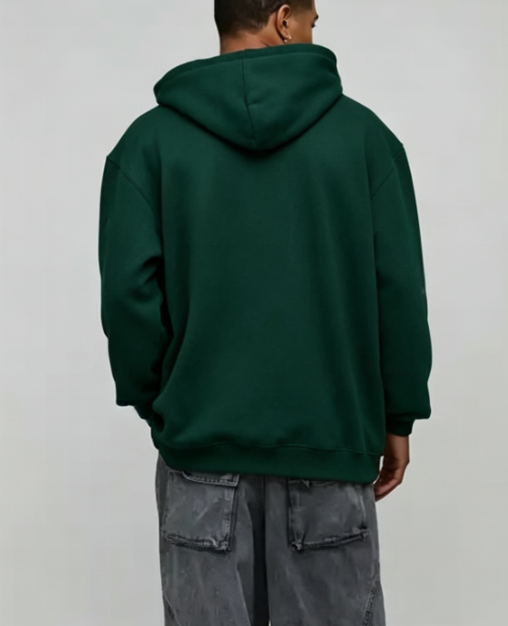
280–360 GSM fleece and French terry can change hand feel, shrinkage, and print appearance after laundering. Puff ink, silicone, embroidery, and discharge effects also need fabric-specific testing. Wash-test the approved sample against the intended care label, then record acceptable shrinkage and color-change limits. Confirm artwork size after wash, especially across XS–3XL grading.
Ignoring Time And QC
Four to eight colorways multiply fabric booking, shade-band approval, and packing complexity; production lead time starts after approvals and material confirmation. Keep a first run focused and set calendar milestones for sampling, bulk fabric, PP approval, inspection, and freight. AQL, measurement tolerances, defect definitions, and reinspection actions must be written before cutting. For fit-critical points, specify tolerances such as ±1 cm rather than accepting ‘within standard.’
9. Launching Your Sweatshirt Collection
A controlled first run begins with a defined customer, price point, and 100-unit-per-style-and-color production threshold. For wholesale sweatshirts, reserve time for approvals before committing fabric or freight.
Define The Product Brief
One target wearer, retail price, and channel should govern silhouette, weight, and decoration. Specify whether the launch needs cropped, standard, oversized, or extended sizing from XS through 3XL. A complete tech pack records measurements, tolerances, construction callouts, artwork placement, trims, labels, and packaging. Approve feasibility and target cost before sampling.
Lock Materials And Color
280–360 GSM French terry suits many transitional programs, while 320–420 GSM brushed fleece supports colder-weather sweatshirts. Review swatches for hand feel, shrinkage, pilling, rib recovery, and print compatibility. Pantone references, lab dips, and decoration strike-offs are separate approval gates. Confirm bulk fabric, rib, thread, drawcord, and label colors against signed standards.
Sample, Fit, And Grade
One prototype should test construction, artwork, and overall proportion before a size set is requested. Allow at least one revision when changing body length, shoulder drop, sleeve pitch, or hood shape. XS–3XL grading requires deliberate increments rather than simple enlargement. Approve measurements, wash results, and fit on representative bodies before bulk release.
Release Production And Launch
Four decision gates reduce costly corrections: sample approval, size-set approval, color approval, and pre-production sample approval. Bulk should start only after the approved specification package matches purchase-order quantities. 6–12 weeks is a practical first-run planning window, depending on fabric availability, revisions, decoration, and destination. Inspect incoming fabric, in-line sewing, final measurements, and packed goods; book freight early and prepare product photography, size charts, SKU data, and launch inventory.
10. wholesale sweatshirts Pricing and Cost
100 units per style and color is Junsheen’s practical starting point for a capsule program; unit cost falls as cutting, pattern, sampling, print-screen, and packing setup are spread across more garments. Treat the ranges below as sourcing guidance, not a binding price list: a supplier-specific quote should state fabric, construction, decoration, Incoterm, and delivery destination. 280–360 GSM cotton fleece or French terry commonly costs more than lighter 240–280 GSM programs, while brushed interiors, oversized panels, kangaroo pockets, zippers, and contrast ribs add labor or material. Screen-print color count, puff or embroidery stitches, custom labels, branded packaging, testing, and air versus sea freight all change landed cost; compare quotations on the same approved specification and destination.
| Quantity tier | Indicative unit-cost driver | Typical production planning effect | Quote check |
|---|---|---|---|
| 100–299 units | Highest setup allocation | Sampling and approvals dominate; allow 3–5 weeks after approval | MOQ by style, color, and size ratio |
| 300–999 units | Better fabric and setup absorption | Material booking becomes more efficient; allow 4–6 weeks | GSM, composition, Pantone, and yield |
| 1,000–2,999 units | Lower cut-and-sew cost per unit | Bulk line scheduling supports steadier output; allow 5–7 weeks | Print colors, embroidery stitches, and packaging |
| 3,000+ units | Strongest scale leverage, subject to fabric availability | Lead time depends on capacity and freight booking | EXW/FOB terms, carton count, duties, and destination |
Request Your Wholesale Sweatshirts Quote
Send your tech pack, sketch or product idea to JUNSHEEN for fit-focused development, sampling and a clear production quotation.