
Men’s Custom Tshirt Manufacturing From 100 Units
Launch men’s custom tshirt programs with fit-focused XS–3XL development, one-stop OEM, ODM and private-label production, and scalable global support.
Featured Products for men’s custom tshirt Development






Related men’s custom tshirt Catalogue and Quotation

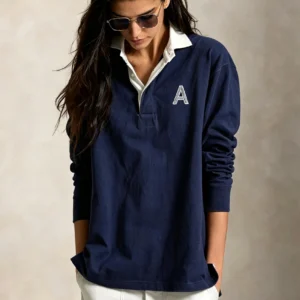


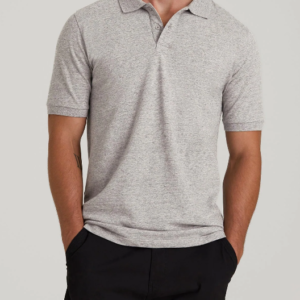


Men’s Custom Tshirt Production, Built for Brands
From first sample to repeat bulk orders, JUNSHEEN combines flexible entry quantities with fit-led development and export-ready execution.
100-Unit Starting MOQ
Launch men’s custom tshirt capsules from 100 units per style and color, with practical support for emerging labels and test collections.
Fit-Engineered XS–3XL
Pattern makers refine proportions, mobility and grading across normal, oversized and extended-size fits instead of simply enlarging a base pattern.
Integrated Brand Decoration
Coordinate screen printing, embroidery, washes, labels, trims and packaging through one production team for more consistent brand execution.
Scalable Production Capacity
More than 200 skilled workers and 80,000-plus monthly units support reliable progression from small launches to ongoing global programs.
Global Export Support
Receive responsive quotation, production coordination, quality control and shipment support from a manufacturer serving fashion brands worldwide.
Custom Programs for Every Collection
From capsule launches to wholesale replenishment, JUNSHEEN develops fit-focused casualwear, denim, knitwear and outerwear from 100 units per style and color.

Custom Hoodies
Develop custom hoodies in fleece, French terry or jersey with your preferred weight, fit and construction. JUNSHEEN supports XS–3XL grading, oversized proportions, embroidery, screen printing, custom labels and coordinated color programs for launches and replenishment.
Request a Quote
Custom T-Shirts
Build custom T-shirts from combed cotton, Pima cotton, organic options or performance blends. We develop necklines, sleeve lengths, body fits and size grading, then add screen print, DTG, DTF, embroidery, washes, labels and retail-ready packaging.
Request a Quote
Custom Jeans
Produce custom jeans with selected denim weights, stretch levels, washes and hardware. Our team supports fit development, rise and inseam adjustments, extended-size grading, distressing, garment finishing, branded trims and repeatable bulk specifications.
Request a Quote
Custom Sweaters
Source turtle neck sweater bulk programs with knit structures matched to your target hand feel, warmth and price point. JUNSHEEN develops gauges, yarn blends, rib details, body proportions and XS–3XL grading for private-label and wholesale collections.
Request a Quote
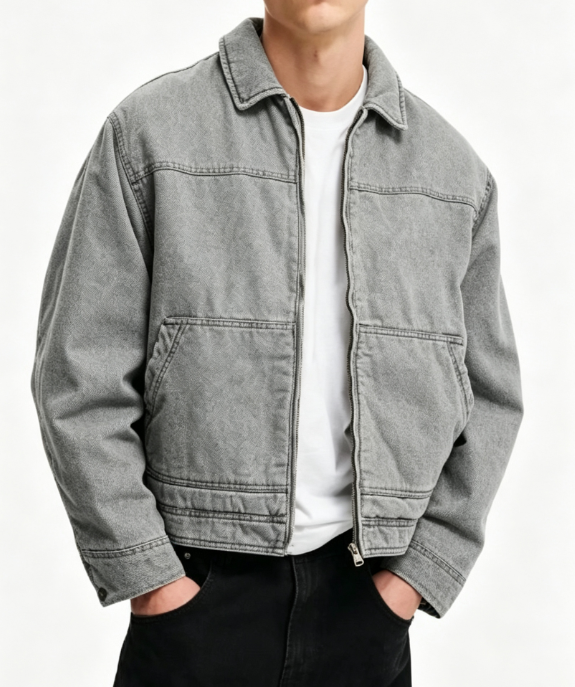
Custom Jackets
Develop custom jean jackets with denim selection, fit specifications and finishing built around your collection. Choose classic, cropped, oversized or extended-size silhouettes, then add washes, distressing, embroidery, patches, branded buttons, labels and packaging.
Request a Quote
Custom Sweatshirts & Crewnecks
Create custom crewneck hoodie and sweatshirt programs in fleece or French terry. We refine neck, shoulder, sleeve and body proportions, support regular and oversized fits, and apply embroidery, prints, washes, rib trims and private-label details.
Request a Quote
Custom Cardigans
Produce custom cardigans in knitted yarns selected for drape, warmth and durability. Development covers gauge, stitch construction, button or zipper options, pocket placement, fit grading and branded trims for capsule collections, retail programs and wholesale orders.
Request a Quote
Custom Puffer & Down Jackets
Develop custom puffer jackets with shell, insulation, lining and quilting specifications suited to your market. JUNSHEEN supports fit development, fill distribution, zippers, snaps, reflective details, custom labels and quality checks before export.
Request a Quote
Custom Denim Shorts
Create custom jean shorts with denim weights, inseams, rises and hem treatments aligned to your customer. We support regular, relaxed and extended-size fits, plus washes, distressing, embroidery, patches, branded hardware and low-MOQ production.
Request a Quote
Custom Sweater Dresses
Develop custom sweater dresses with yarn, gauge and stitch choices that support the intended silhouette. Pattern and knitting development address length, neckline, waist shaping, sleeve proportion and XS–3XL grading for more consistent fit across the size range.
Request a Quote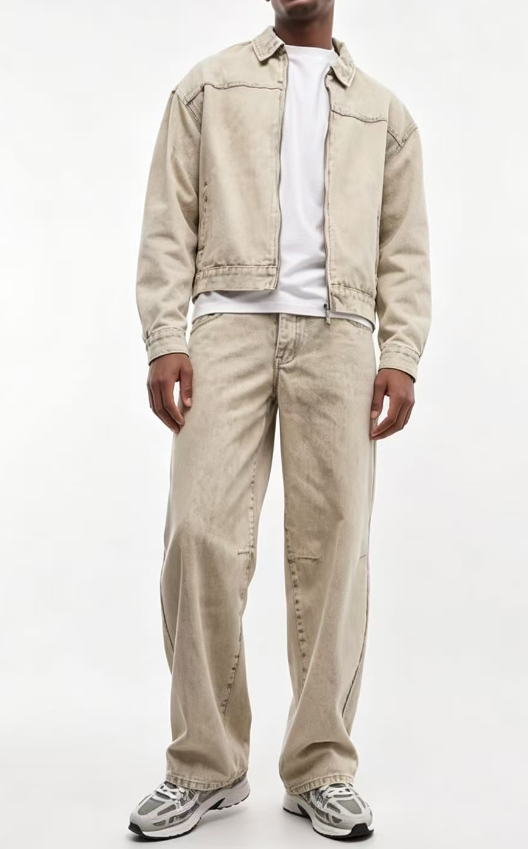
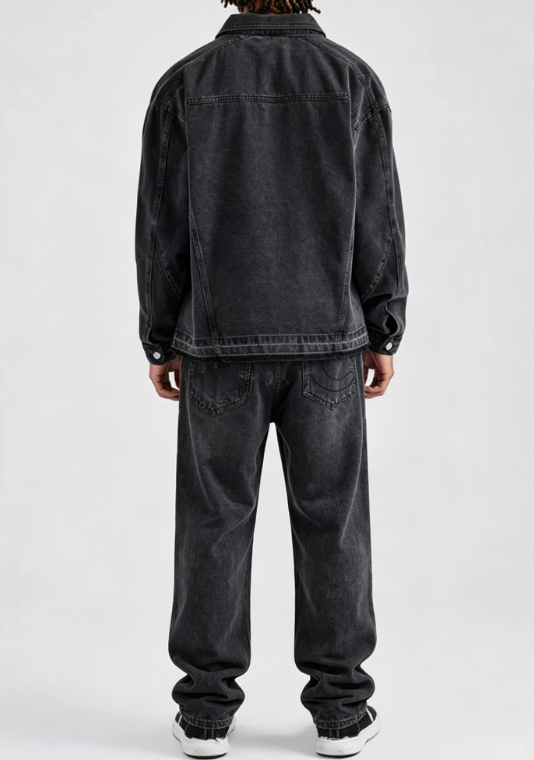
Custom Denim Sets
Produce mens denim suits wholesale programs as coordinated denim jackets and jeans with aligned fabric, wash and hardware. JUNSHEEN manages matching specifications, size grading, branding details, sampling and scalable production for retail or distributor orders.
Request a Quote
Custom Polo Shirts
Develop custom polo shirts in piqué, jersey or performance knits with collar construction, placket details and fit tailored to your brand. Add embroidery, printing, contrast trims, custom buttons, labels and size grading from XS through 3XL.
Request a Quote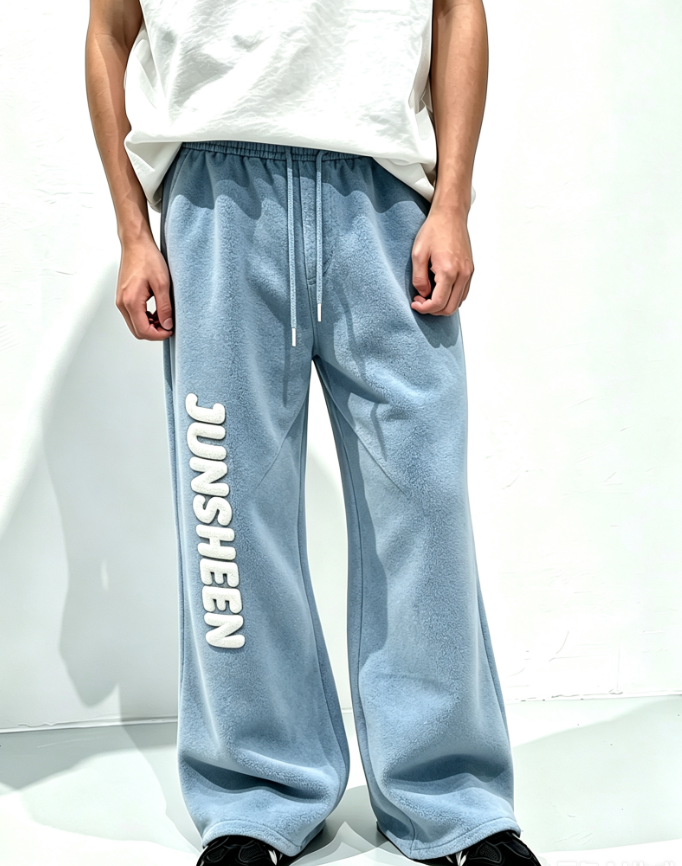
Custom Sweatpants
Create custom sweatpants in fleece, French terry or jersey with jogger, straight-leg or relaxed proportions. We develop rise, inseam, waistband and pocket details, then add embroidery, printing, washes, drawstrings, labels and matching tops.
Request a Quote
Custom Shorts
Produce custom shorts for casualwear, active-inspired and coordinated collection programs. Select fabric, inseam, rise, pockets and waistband construction, then refine fit across XS–3XL with decoration, branded trims and packaging options included.
Request a Quote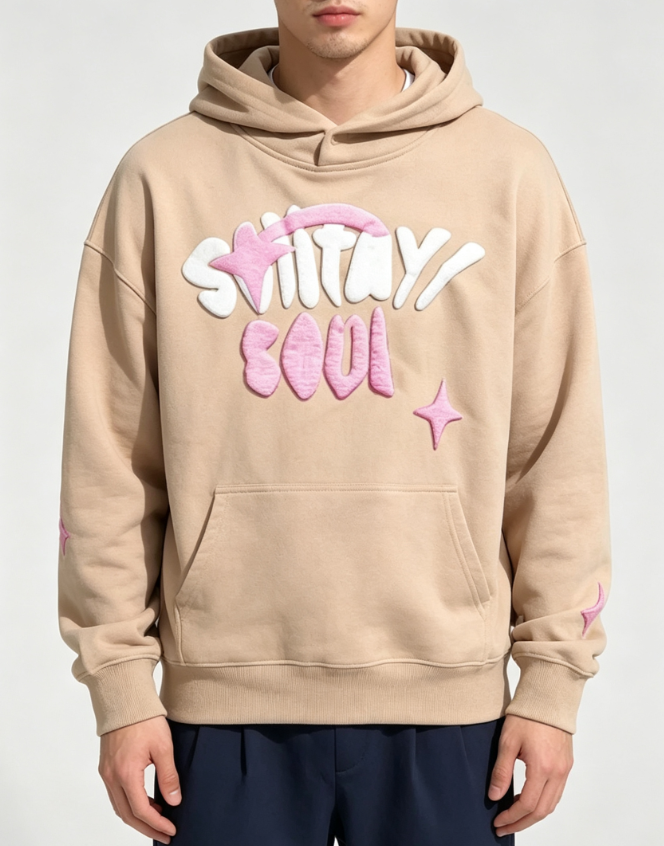
Custom Pullovers
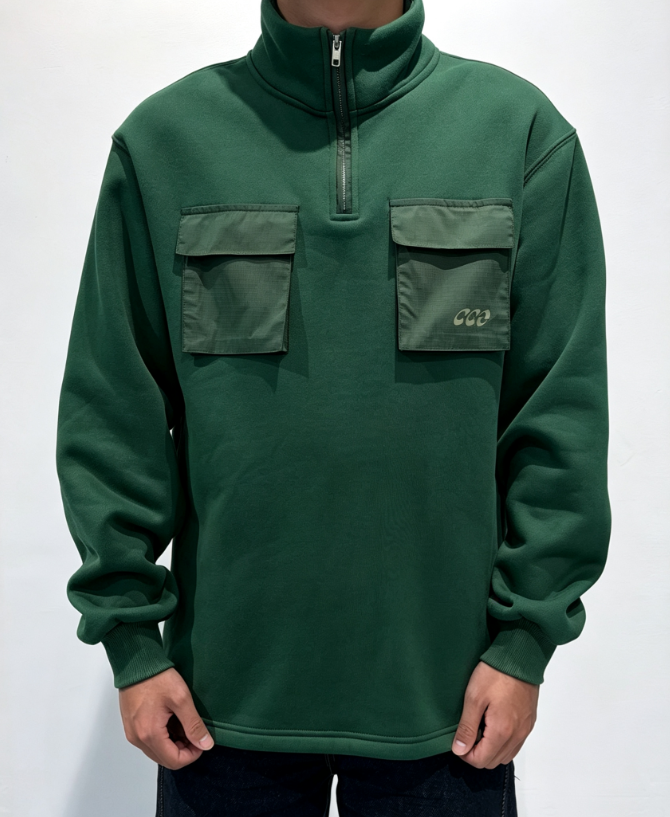
Develop custom pullovers in knit, fleece, French terry or woven constructions based on your design direction. JUNSHEEN supports quarter-zip, half-zip and classic styles, with fit development, fabric sourcing, decoration, labels and scalable production.
Request a QuoteMen’s Custom Tshirt Materials Selected for Fit, Feel and Wear

Cotton Jersey
A breathable, soft everyday staple for retail-ready men’s custom tshirt programs. Available in lightweight to heavyweight constructions, cotton jersey offers dependable comfort, clean print results and a familiar hand feel for core collections.

Pima Cotton
Pima cotton delivers a smoother, more refined hand feel for premium tees and elevated basics. Its long-staple fibers support softness, strength and better surface consistency, making it well suited to high-end branding and embroidery.

Organic Cotton
Organic cotton supports responsible material positioning without sacrificing a natural, comfortable feel. Ideal for conscious casualwear lines, it can be sourced in combed jersey qualities with soft hand feel, reliable breathability and adaptable garment weights.

Cotton Blend Jersey
Cotton blends combine the natural touch of cotton with added stretch, recovery or durability from selected fibers. They suit fitted, oversized and active-casual T-shirts, helping maintain shape and improve wear performance through repeated washing.

Performance Knits
Performance knits offer moisture management, stretch and quick-drying comfort for activewear-inspired T-shirts and uniforms. Fabric weight, stretch direction and surface texture can be specified to support movement, sublimation, transfer printing or technical branding.

Recycled Fiber Blends
Recycled fiber blends provide an option for brands building lower-impact collections. Depending on the composition, they can deliver durable everyday wear, soft brushed or smooth surfaces, and stable construction suitable for screen printing and private-label finishing.
Men’s Custom TShirt Decoration and Finishing Options

Logo Embroidery
Flat, 3D puff, chain-stitch and applique embroidery add tactile dimension to chest logos, sleeves and small placements. Secure stitching delivers a premium, durable branded result that holds its shape through regular wear and washing.

Screen Printing
Plastisol, water-based, puff, flocking, silicone, high-density, foil and discharge screen prints create bold, repeatable artwork on men’s custom tshirt programs. We match ink systems to fabric and design for opacity, hand feel and wash durability.

Digital Transfers
DTF, DTG and heat-transfer processes reproduce detailed graphics, gradients and short-run colorways without complex screen setups. They provide sharp visual definition and flexible placement for samples, capsules and low-MOQ branded T-shirt production.

Dye Sublimation
Dye sublimation permanently infuses full-color artwork into compatible polyester performance fabrics. The finish stays lightweight, breathable and resistant to cracking or peeling, making it ideal for all-over graphics and technical custom T-shirts.

Garment Dyeing
Garment dyeing colors the finished T-shirt for rich tonal character and a more lived-in appearance. It supports fashion-led seasonal shades while creating subtle variation that gives each production run an individual visual identity.

Wash Finishes
Enzyme, softening, anti-pilling, acid-wash, stone-wash, brushing and napping treatments refine hand feel and surface character. These controlled finishes can create softness, vintage depth or elevated texture while preserving dependable wear performance.
Men’s Custom T-Shirt Trims and Brand Accessories

Woven Brand Labels
Custom woven main, size and care labels give men’s custom T-shirt programs a polished private-label finish. Junsheen can apply labels at the neck, side seam or hem with specifications matched to your fabric and construction.

Custom Hang Tags
Branded hang tags communicate collection details, sizing, materials and care information at retail. Choose custom shapes, stocks, finishes, strings and attachment methods that align with your launch, wholesale presentation and target price point.

Drawcord Tipping
For layered tees, hooded styles and coordinating casualwear, custom drawcords and logo tipping create a cohesive collection detail. Select cord thickness, color, aglets and finishing treatments to reinforce your brand identity.

Custom Metal Hardware
Add branded snaps, buttons, zippers, rivets and eyelets where the design calls for functional distinction. Junsheen sources hardware in finishes suited to your garment, then checks attachment strength during production quality control.

Logo Patches
Woven, embroidered, leather-look and silicone patches add a dimensional logo treatment to chest, sleeve, hem and back-neck placements. They work especially well for premium streetwear, oversized fits and capsule collections.
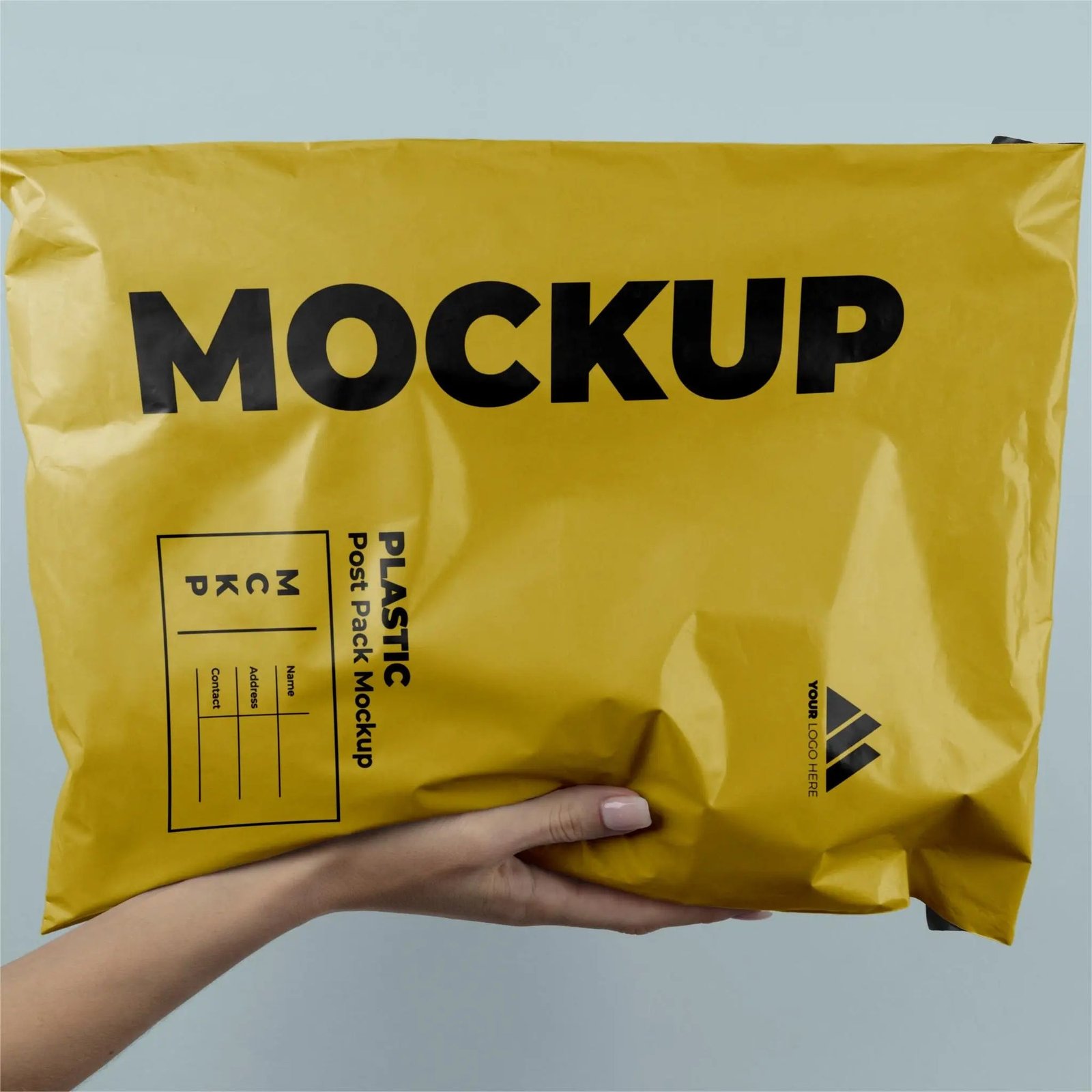
Branded Packaging
Finish your order with custom polybags, tissue, sticker seals, size markers and shipping-ready carton details. Packaging can be coordinated with labels and hang tags, helping your men’s custom T-shirt collection arrive organized and retail prepared.
About JUNSHEEN Apparel Manufacturing
Founded in 2010 in Humen Town, Dongguan, JUNSHEEN gives fashion brands one manufacturing partner from idea through export. Our OEM, ODM and private-label team develops men’s custom tshirt programs alongside casualwear, denim, knitwear and outerwear for labels building distinctive collections.
With 200+ skilled workers and monthly capacity above 80,000 units, we support focused launches from 100 units per style and color as well as repeat bulk programs. Cut-and-sew, knitting, fabric sourcing, decoration, quality control, labeling and packaging are coordinated within one responsive supply chain.
More than 2,000 fashion-brand clients worldwide rely on JUNSHEEN for fit-focused development and dependable execution. We refine XS–3XL, extended-size, plus-size and oversized patterns for real wearability, then retain production records to help repeat men’s custom tshirt orders move with greater consistency.

Men’s Custom T-Shirt Fit-First Development and Scalable OEM Execution
XS–3XL Pattern Engineering
JUNSHEEN develops men’s custom tshirt fits from XS through 3XL with proportion-specific grading, not simple size enlargement. Pattern makers refine shoulder balance, body length, sleeve shape and mobility so every size supports the intended silhouette and wear experience.
- Normal, extended-size, plus-size and oversized fit development
- Size grading tailored to body proportion and garment silhouette
- Fit samples and size sets before bulk approval

Technical Development Support
Bring a complete tech pack, sketch, reference garment or early concept. Our development team reviews construction feasibility, recommends fabrics and trims, creates patterns and prototypes, and resolves production details before your custom T-shirt program enters bulk manufacturing.
- OEM, ODM and private-label development support
- Fabric weight, hand feel and cost guidance
- Prototype sampling and pre-production approval

Integrated Decoration Control
Cut-and-sew production, decoration, washing, labels and packaging are coordinated through one manufacturing supply chain. This gives brands clearer control over artwork placement, print performance, embroidery execution, finishing details and branded presentation for each men’s custom tshirt order.
- Screen print, DTG, DTF, puff, silicone and transfer options
- Flat, 3D/puff and logo embroidery capability
- Custom labels, hang tags, trims and packaging
Consistency for Repeat Programs
JUNSHEEN retains approved patterns, graded size sets and material records to support reliable reorders as collections grow. With 200+ skilled workers, 80,000+ monthly units of capacity and low MOQs from 100 units per style and color, brands can scale with confidence.
- Recorded specifications for faster repeat production
- In-line, measurement, decoration and final inspection
- Global export support for ongoing wholesale and retail programs
Why Brands Choose JUNSHEEN Over Typical Suppliers
Evidence-led manufacturing support for men’s custom tshirt programs, from fit development through global delivery.
← 左右滑动查看 →
Men’s Custom Tshirt Production Process
A controlled OEM workflow that turns your concept into production-ready custom T-shirts, from feasibility review through global delivery.
Review Design Feasibility
We assess your tech pack, sketch, reference garment, target price, MOQ, fit requirements, decoration, and timeline to confirm a practical development route.
Source Fabrics and Trims
Our team recommends jersey weights, cotton blends, labels, packaging, and trims based on hand feel, durability, wash performance, branding, and cost targets.
Pattern and Sample Development
Pattern makers build and grade XS–3XL fits, then produce prototype samples for measurement, construction, print placement, fabric, and wash approval.
Approve Pre-Production Details
After sample feedback, we finalize specifications, color standards, graded size sets, materials, artwork, labels, and production records before bulk cutting begins.
Produce and Inspect Bulk
200+ skilled workers manage cutting, sewing, decoration, finishing, and multi-stage checks covering fabric, measurements, construction, fit, and packed-goods quality.
Pack and Ship Worldwide
We complete branded packing, final quantity verification, export documentation, and shipment coordination, supporting dependable delivery for launches, replenishment, and wholesale programs.
Start Your Men’s Custom Tshirt Program
Move from a tech pack, sketch, reference garment, or mood board to approved bulk production with clear development milestones.
Send Your Product Brief
Share your tech pack, sketch, reference garment, or mood board with target quantities, size range, fabric preferences, decoration requirements, and delivery market.
Review Feasibility Together
Our development team assesses construction, fit, materials, trims, decoration, 100-unit MOQ feasibility, and manufacturability before recommending practical refinements for your custom T-shirt.
Approve Samples and Pricing
Review prototype samples, fabric swatches, graded XS–3XL specifications, workmanship, and quotation details. Confirm revisions and approve the pre-production direction before placing bulk production.
Confirm Bulk Production
Approve final samples and order details, then Junsheen manages material preparation, cut-and-sew production, in-line inspections, printing or embroidery, labels, packing, and export coordination.
Receive Production-Ready Goods
Final quality control verifies measurements, construction, decoration, and packed goods before shipment. Retained patterns and material records help streamline reliable repeat orders as your program scales.
Custom Clothing Manufacturer Credentials and Compliance Documents



Men’s custom tshirt Client Results from Global Fashion Brands
JUNSHEEN turned our reference tee into a production-ready size set from XS to 3XL. The revised shoulder and body proportions reduced our sampling rounds from three to two, and our first 120-unit color run arrived ready for retail.
For our oversized menswear launch, the team clearly explained fabric weight, print placement, and grading before sampling. We approved the second prototype and reordered two additional colors within four months with the same fit and decoration quality.
We needed a supplier that could start at 100 units without treating the order like an afterthought. JUNSHEEN managed labels, hang tags, embroidery, and export packing in one program, helping us launch on schedule across three retail accounts.
Men’s Custom TShirt Manufacturing FAQ
Clear answers on MOQ, development, production, fit, payment, and delivery for your next program.
What is the MOQ for a men’s custom tshirt order?
Can I order a men’s custom tshirt sample before bulk production?
How long does men’s custom tshirt production take?
Which fabrics can you recommend for custom men’s T-shirts?
Can you grade men’s custom tshirt sizes from XS to 3XL?
What payment terms do you offer for new apparel orders?
Can JUNSHEEN ship custom T-shirts internationally?
How do you protect my designs and repeat-order details?
The Complete Buyer’s Guide to men’s custom tshirt
Use this decision framework to select silhouettes, fabrics, decoration methods, and a dependable OEM/ODM supplier—while avoiding specification, sampling, costing, and production mistakes that can undermine your men’s custom tshirt program.
1. What Is a men’s custom tshirt?
100 units per style and color is a practical starting point for a men’s custom tshirt OEM program, where a buyer develops a branded garment rather than simply reselling a stock tee. The brief can begin with a tech pack, reference sample, sketch, mood board, or a selected blank, then moves through specification review, sampling, and bulk approval. 3 common routes serve different buying models. Private-label programs suit retailers, wholesalers, and new labels that need proven blank or base styles with custom neck labels, wash-care labels, hang tags, packaging, and approved artwork; made-to-order programs suit brands adapting an existing factory block with selected fabric, color, decoration, and trims; fully custom OEM/ODM suits designers building a distinct silhouette, pattern, and product identity. XS through 3XL grading is not a simple scale-up: shoulder balance, body length, sleeve proportion, and grading increments should be specified across the size set. Buyers can control fabric composition and GSM, fit, Pantone color, neck rib, stitch details, print or embroidery method, labels, packaging, and carton marking—provided each choice is locked before pre-production approval.
2. Evolution of men’s custom tshirt Production
1901: the crew-neck cotton undershirt entered the U.S. Navy uniform, establishing the lightweight, washable base that later became the T-shirt. Once athletes, workers, and film stars wore it visibly, a men’s custom tshirt could carry a brand identity rather than merely serve as an underlayer. 1930s: screen printing made repeatable logos, event graphics, and team merchandise practical at scale. That legacy still shapes production decisions: screen print suits larger runs with solid Pantone colors, while water-based, plastisol, puff, and high-density inks let labels position the same silhouette from basic merch to premium streetwear. 1970s: streetwear turned fit, blank quality, and limited drops into product signals, driving demand for ring-spun cotton, heavier 180–260 GSM jerseys, oversized proportions, and reliable neck recovery. DTG and DTF now make artwork testing and short color runs more accessible, while buyers increasingly ask suppliers about organic or recycled fibers, OEKO-TEX chemical controls, and wash performance. 100 units: low-MOQ sourcing lets an emerging label validate a graphic, fit, or niche audience before committing to bulk inventory. A capable manufacturer should therefore connect pattern development, graded sizes, fabric swatches, decoration testing, sampling, and repeatable records—so a successful capsule can scale without changing the garment’s hand feel or fit.
3. Types of men’s custom tshirt Styles
Six core silhouettes cover most men’s custom tshirt assortments, but each should be specified around its intended wearer and retail role. Start with a dependable core fit, then add fashion or function-led variations without duplicating the same demand.
| Style Family | Silhouette | Likely Weight | Merchandising Role |
|---|---|---|---|
| Classic crewneck | Regular, balanced | 180–220 GSM | Core logo basic |
| Oversized streetwear | Wide, drop shoulder | 240–300 GSM | Fashion statement |
| Fitted athletic | Closer, mobile | 160–200 GSM | Performance capsule |
| Pocket or specialty | Detail-led variation | 180–220 GSM | Add-on assortment |
Classic Crewneck

180–220 GSM ring-spun cotton jersey gives a regular crewneck reliable year-round weight and a clean print surface. It suits broad age ranges, uniforms, promotional programs, and dependable logo basics. 1×1 rib collars, neck tape, woven hem labels, and chest or back prints offer clear branding without changing the familiar silhouette.
Oversized And Heavyweight
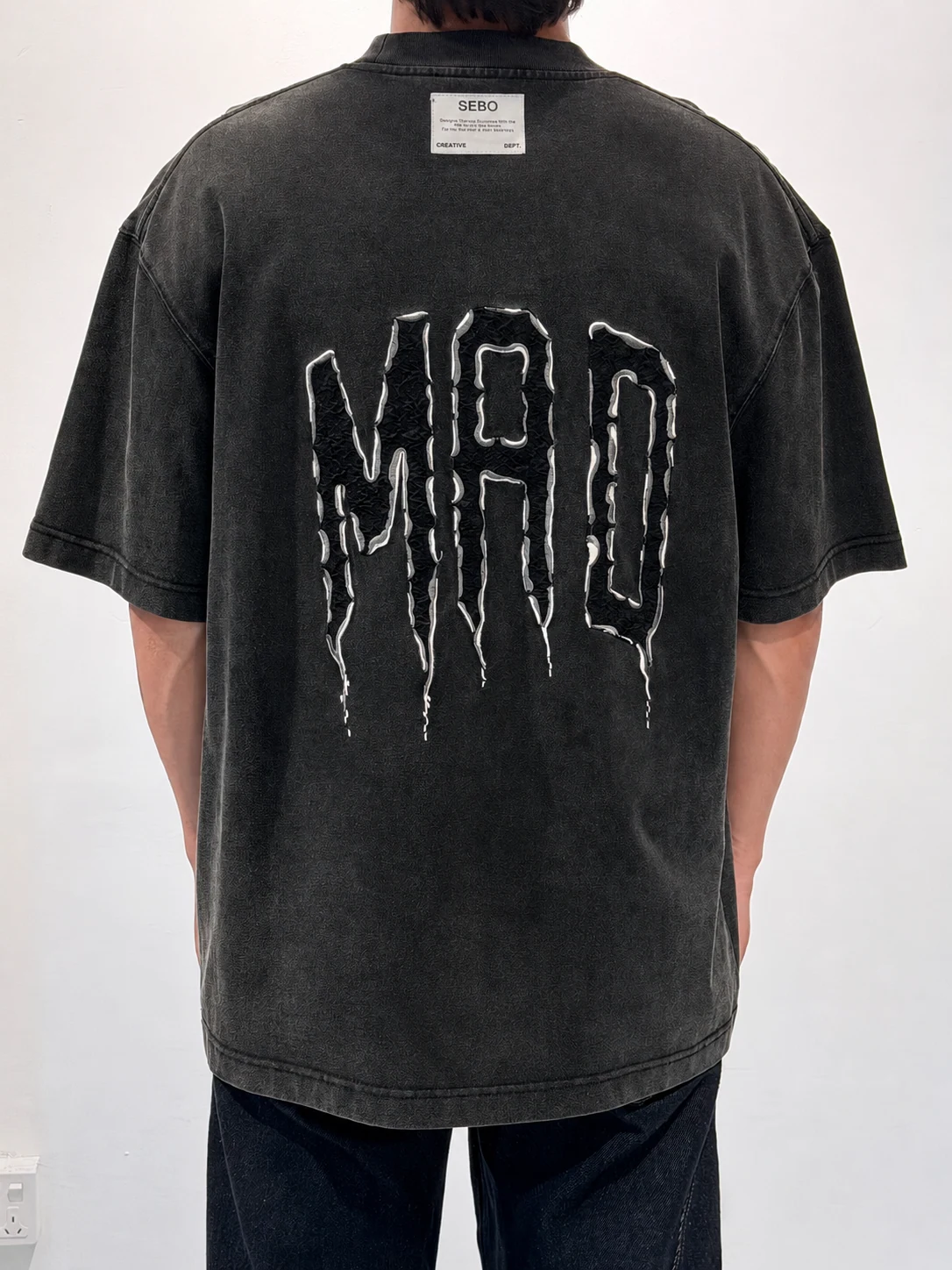
240–300 GSM cotton creates the structured drape expected in oversized, drop-shoulder, and heavyweight streetwear tees. Target younger fashion customers with longer sleeves, wider bodies, puff prints, embroidery, or garment-wash effects. 2–4 color seasonal drops work well when the tee is a statement item rather than an entry-price basic.
Fitted And Athletic

160–200 GSM cotton-elastane or performance knit supports closer bodies, shorter sleeves, and movement-focused fits. Athletic, lifestyle, and fitted-basics customers need careful chest, bicep, and body-length grading. Reflective transfers, tonal logos, and moisture-management fabric stories position these styles for active capsules.
Pocket And Specialty Styles

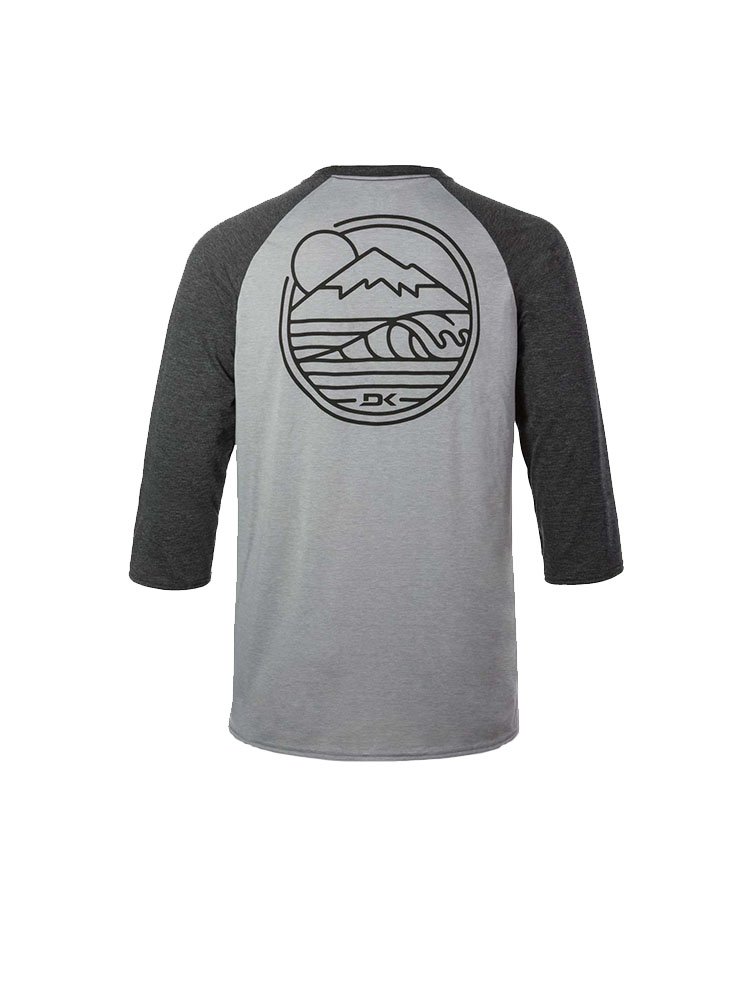
180–220 GSM jersey also supports pocket tees, long sleeves, raglans, henleys, and contrast-panel styles. A chest pocket, woven flag label, contrast collar, or sleeve print adds value to wholesale packs and coordinated collections. 100-unit production can be practical for a focused color-and-size run when trims and decoration are standardized.
4. Fabrics for a men’s custom tshirt
160–220 GSM is the most versatile range for a men’s custom tshirt, balancing breathable jersey with enough opacity for decoration. Specify fiber, yarn, knit, weight and finishing together; GSM alone does not predict hand feel or shrinkage.
| Fabric | Typical GSM | Hand And Performance | Best Use |
|---|---|---|---|
| Open-end cotton jersey | 160–180 | Dry hand; breathable; durable | Value retail, promo tees |
| Combed ring-spun cotton | 180–220 | Soft, smooth; strong print surface | Premium blanks, fashion labels |
| Organic cotton jersey | 180–220 | Soft; breathable; certification-dependent | Responsible premium programs |
| Cotton-poly blend | 160–200 | Faster drying; lower wrinkle | Active casualwear, uniforms |
| Recycled blend | 180–220 | Varied hand; verify composition | Sustainability-led collections |
| Performance polyester knit | 140–180 | Moisture-wicking; durable | Sport and outdoor tees |
Yarn And Knit Choices

20/1 open-end cotton creates a dry, firmer hand and value-led durability, while 30/1 combed ring-spun yarn feels smoother and prints cleaner. Single jersey is the standard tee knit; interlock is denser, more stable and more premium.
Shrinkage And Performance

3–5% residual shrinkage is a common target after controlled compaction, but buyers should approve wash-tested measurements rather than rely on a nominal GSM. Cotton breathes well but dries slowly; polyester improves abrasion resistance, moisture transfer and color retention.
- Request wash testing before size-set approval
- Specify pre-shrunk or compacted construction
- Match dyeing and print method to fiber content
Market Positioning
100-unit capsule orders benefit from swatches and prototype washes because recycled content, enzyme softening and garment dye can change shade and hand. GOTS claims require certified organic supply-chain documentation; recycled claims should identify the fiber and percentage.
5. Customization and Decoration Options
At 100 units per style and color, a men’s custom tshirt can carry both visual decoration and complete private-label details. Choose the process after confirming fabric, artwork scale, color count, and reorder volume.
| Method | Best Use | Finish | Setup |
|---|---|---|---|
| Screen print | 100+ repeat runs, spot art | Ink texture; durable | Screens per color |
| DTG | Detailed artwork, cotton-rich fabric | Soft hand; durable with care | Minimal setup |
| DTF | Small runs, blends, dark colors | Transfer film feel | Minimal setup |
| Embroidery or appliqué | Logos and premium accents | Raised, durable texture | Digitizing required |
| All-over print | Polyester-led cut panels | Integrated graphic | Panel artwork required |
| Wash effects | Vintage or garment-dyed aesthetic | Varied, lived-in character | Sample approval required |
Match Process To Artwork

Screen printing suits repeat programs and bold Pantone artwork; each color normally needs a separate screen. DTG is strongest for photographic, full-color art on cotton-rich light garments, while DTF transfers add flexibility on blends and darker shades.
Build A Branded Finish

Neck labels, woven labels, wash-care labels, hangtags, and branded packaging turn a blank garment into a retail-ready unit. Supply final logo files, label copy, placement, and packing instructions before pre-production approval.
- Use printed neck labels for a soft, low-profile finish.
- Choose woven labels for durable logo definition.
- Specify hangtag attachment and carton packing clearly.
Use Texture Intentionally

Embroidery, appliqué, puff ink, high-density print, and garment washes create texture that flat graphics cannot. Test decoration on the actual jersey weight because stretch, nap, seams, and wash effects can change the final appearance.
6. Quality Elements in men’s custom tshirt Construction
A reliable men’s custom tshirt is defined by repeatable specifications, not a visually acceptable first sample. Lock measurable construction, wash performance, and size control before bulk approval so quality remains stable across colors and replenishment orders.
Neck And Shoulder Stability
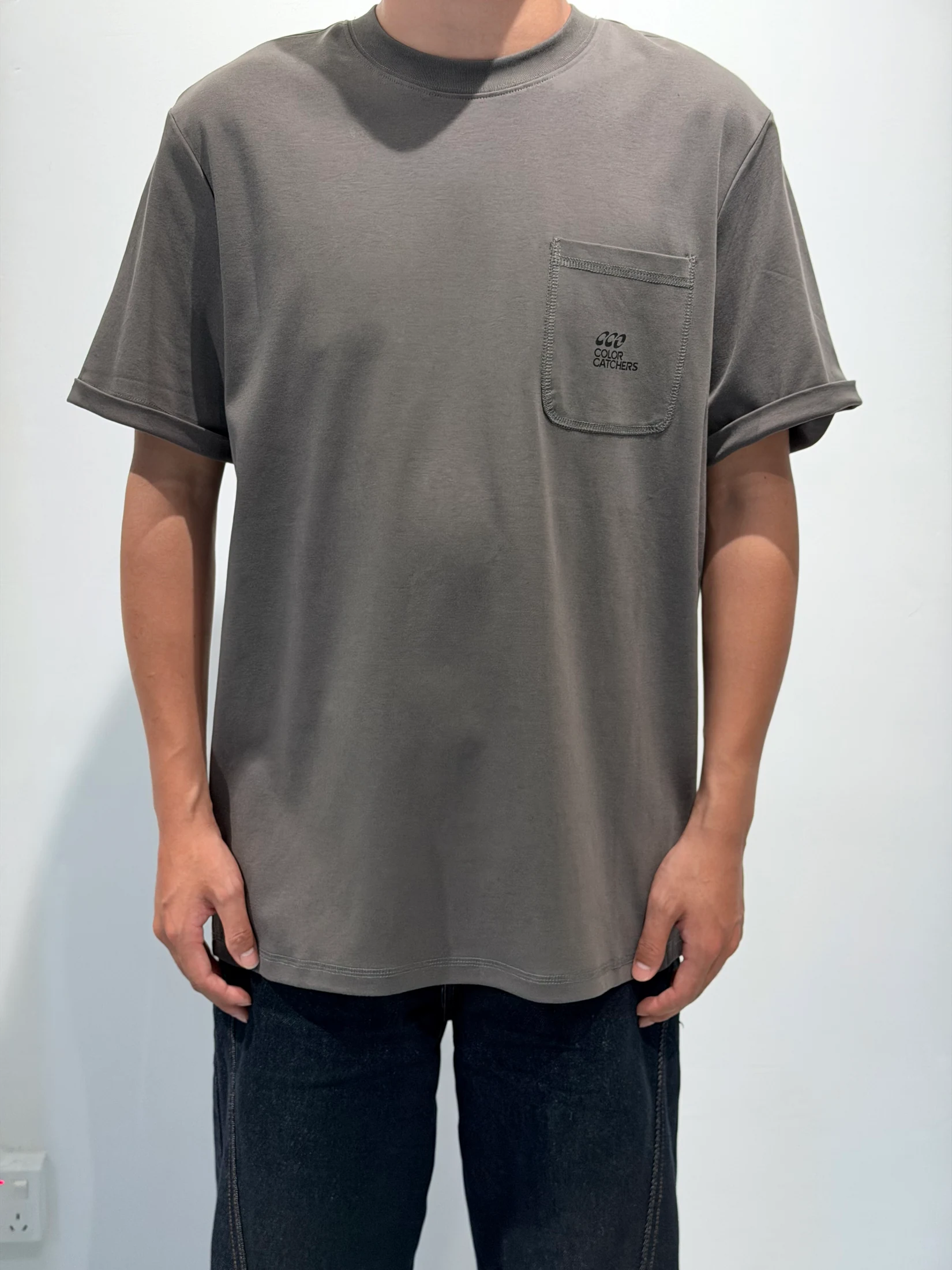
A 1×1 or 2×1 rib collar should recover after stretch without rippling; specify rib composition, finished neck width, and neckline seam allowance in the tech pack. A shoulder-to-shoulder tape stabilizes the back neck and limits seam growth. Request clean coverstitching, balanced thread tension, and no twisted tape on the approved sample.
- Specify collar width and rib recovery method
- Confirm shoulder tape material and placement
- Check neckline for puckering after wash
Stitching And Seam Finish

Eight to 10 stitches per inch is a practical starting point for jersey seams, subject to fabric weight and stretch. Side seams should lie flat, hems should not tunnel, and overlock edges should be fully enclosed without loose loops. Two wash cycles reveal skipped stitches, seam grin, and hem distortion better than an unworn sample. Include stitch type, SPI target, thread color, and seam allowance on the construction sheet.
Testing, Grading, And Inspection
A tech pack should state fabric GSM tolerance, allowable shrinkage, colorfastness requirement, pilling standard, grade rules, and point-of-measure tolerances. Typical finished measurement tolerances are ±1 cm at key body points, but brands should set stricter limits where fit is critical. A pre-shipment inspection should compare packed goods against the approved size set, not only a single sample. Measure multiple sizes, review wash-tested fabric, and check shade continuity across the production lot.
- State GSM and shrinkage tolerances
- Attach graded measurement specifications
- Inspect measurements, decoration, and packed quantities
7. How to Choose a Manufacturer
Choosing a men’s custom tshirt manufacturer is a risk-control decision, not a price comparison. Evaluate evidence from the first feasibility review through the sealed pre-production sample, then confirm the supplier can repeat that result at your order volume.
Verify Relevant Capability
2010 is the founding year buyers can use when assessing Junsheen’s production history; request comparable jersey styles, construction specifications, and finished samples. Confirm whether the factory handles OEM from a tech pack and ODM from a sketch or reference. 100 units per style and color is Junsheen’s stated capsule-launch starting point. Ask for the MOQ by fabric, color, print method, and size split, rather than accepting one headline MOQ.
- Comparable product photos and measurements
- MOQ breakdown by style and color
- Monthly capacity and current production slot
Audit Materials And Decoration

160–220 GSM cotton jersey is a common starting range for tees, but hand feel, shrinkage, colorfastness, and pilling must be approved on the actual bulk-intent fabric. Request swatches, composition records, and test or certification documents where OEKO-TEX, GOTS, or recycled-content claims matter. 3 decoration questions expose hidden handoffs: Is screen printing or embroidery in-house, who controls artwork approval, and who inspects placement? Request a strike-off or decorated sample before bulk approval.
Control Samples And Quality
3 checkpoints should be written into the purchase order: prototype, graded size set, and sealed pre-production sample. Compare measurements, wash result, Pantone color, print adhesion, and label placement against the approved specification. AQL inspection language should define the final-goods standard, sampling level, defect classification, rework process, and report format. Ask for incoming-fabric, in-line, and final-packed inspection records from comparable orders.
- Prototype approval before revisions
- Size-set approval before grading release
- Final inspection report before balance payment
Test Communication And Delivery
24–48 hours is a practical response-time test during development; track whether answers resolve technical questions or merely acknowledge them. Name one accountable contact and require written confirmations for fabric substitutions, tolerances, and shipment dates. 80,000+ monthly units is Junsheen’s stated capacity, but available capacity matters more than nominal output. Request a critical-path schedule covering material booking, sample approval, bulk cutting, decoration, final inspection, and export handoff.
8. Common Buyer Mistakes to Avoid
A low quote can hide rework, late freight, and rejected units after production starts. For a men’s custom tshirt, buyers should turn every approval into a measurable record before bulk fabric is cut.
Compare Landed Cost, Not Quotes
Three quotes can use different GSM, print methods, packing, and Incoterms, making unit prices misleading. The cheapest offer can become the costliest when replacements or air freight are needed. 100-unit programs need a line-item comparison covering fabric, trims, decoration, packaging, QC, and freight. Ask each factory to state exclusions and quote the same specification.
Lock Artwork And Specifications

300 dpi artwork and vector logos prevent soft edges, incorrect colors, and avoidable sampling rounds. Missing measurements, placements, or Pantone references force factories to make assumptions. 1 tech pack should specify body measurements, tolerance, fabric composition, GSM, stitch details, label locations, and print dimensions. Send editable AI, EPS, or PDF artwork with a Pantone code where color matters.
Test Fit, Wash, And Decoration

1 size set reveals grading faults that a single medium sample cannot show, especially across XS–3XL. Skipping wash testing can expose shrinkage, twisting, dye bleed, or print cracking only after delivery. 2 wash cycles should be agreed for wash-care testing, while decoration must match fabric and artwork detail. Confirm whether fine lines suit screen print, DTG, DTF, embroidery, or high-density ink before approval.
Control Color, Packing, And Approval
Pantone references and physical lab dips matter because screens vary by display, lighting, and calibration. Digital color approval alone can produce a bulk shade that fails a retail collection. ±1 cm tolerances, approved measurement points, carton dimensions, polybags, labels, and shipping terms should be written into the approval file. Without them, buyers risk disputes, unexpected freight, and samples that cannot be objectively accepted or rejected.
9. Steps to Launch Your Brand
A 100-unit-per-style-and-color starting point makes launch discipline more valuable than a large assortment. Build the men’s custom tshirt program around locked customer, fit, price, and delivery decisions before bulk commitments.
Define The Commercial Brief
Week 1: name the target customer, retail price, channel, competitor set, and launch date. Select one or two core silhouettes rather than expanding colors prematurely. Gate 1: the brand owner approves the assortment, target margin, and size range. The manufacturer confirms whether construction, MOQ, and timeline are feasible.
Build Production-Ready Specifications
Week 2: issue a tech pack with measurement chart, points of measure, GSM target, Pantone colors, stitch details, label placements, and packing instructions. Supply print-ready vector artwork and separate spot colors. Gate 2: approve fabric swatches, trims, strike-offs, and artwork scale before cutting samples. Junsheen can review specifications, source materials, create patterns, and flag manufacturability risks.
Approve Samples In Sequence
Two to four weeks: assess the prototype for silhouette, construction, and decoration placement. Record corrections directly on a dated measurement sheet instead of relying on chat descriptions. One fit sample and a graded size set should confirm shoulder balance, body length, sleeve proportion, and grading from XS through 3XL. Approve a pre-production sample only after every revision is closed.
Control Bulk And Launch
Four checkpoints—incoming material, in-line sewing, measurement and decoration review, then final packed-goods inspection—reduce late surprises. The brand owns final approvals; the factory owns documented execution and corrective action. Two weeks before dispatch: book freight, confirm carton marks and export documents, and prepare product photography, size guidance, SKU data, care copy, and launch inventory allocation.
10. men’s custom tshirt Pricing and Cost
100 units per style and color is JUNSHEEN’s practical starting point for a capsule men’s custom tshirt program; a 100-unit run carries more development, fabric-loss, cutting, and setup cost per garment than a repeat order at 500 or 1,000 units. Request a quotation against a finalized tech pack, size range, Pantone references, decoration artwork, and packaging specification so suppliers can separate one-time development charges from recurring production cost. 160–220 GSM combed ring-spun jersey, a standard crew neck, and one-color screen print are usually simpler cost drivers than heavyweight fabric, oversized blocks, contrast panels, garment dye, or multi-location decoration. Landed cost also changes with woven labels, hangtags, individual polybags, carton requirements, third-party testing, duty treatment, and freight mode; compare EXW, FOB, and delivered quotes on the same assumptions. 2–6 screen colors increase screen preparation, registration risk, and press time, while DTG, DTF, embroidery, and specialty inks change the break-even point by artwork coverage and order volume. Confirm fabric composition, GSM tolerance, shrinkage standard, measurement tolerance, approved sample, inspection level, and balance-before-shipment terms before using any unit figure for retail margin planning.
| Quantity tier | Indicative unit-cost drivers | Typical production lead time |
|---|---|---|
| 100–299 units | MOQ setup, small fabric allocation, sampling amortization | 25–40 days after approvals |
| 300–999 units | Improved cutting efficiency; screen-print setup spreads further | 20–35 days after approvals |
| 1,000+ units | Bulk fabric purchasing and repeatable production reduce unit pressure | 20–30 days after approvals |
| Repeat bulk order | Retained patterns, graded size sets, and material records may reduce development time | 15–30 days, subject to materials |
Ready to Develop Your Men’s Custom T-Shirt Collection?
Send your tech pack, reference garment, or product idea for feasibility review, fit-focused sampling, and a clear production quote from 100 units.