#rankmath
Title: Sweater Gauge and Yarn Count for Brand Approval
Description: Learn how sweater gauge, yarn count, stitch density and panel measurements shape weight, drape, fit and bulk-production approval.
Keyword: sweater gauge and yarn count
#rankmath
Sweater Gauge and Yarn Count: How Brands Approve Weight, Drape and Size Stability
For a knit sweater, “lighter” or “heavier” is not a complete specification. A sweater’s machine gauge, yarn count, yarn composition, stitch construction, finishing method and panel measurements work together. Change one variable and the garment may look, feel, hang or measure differently—even when the visual design appears unchanged.
That is why a fashion brand should approve a sweater as a controlled package of specifications, not simply as a color, silhouette and hand-feel concept. The most useful approval process connects the knitting plan to measurable finished-garment requirements: target dimensions, fit intent, garment weight reference, stretch behavior, wash expectations and approved workmanship.
For brands developing seasonal knitwear, JUNSHEEN supports sweater sampling, pattern development, graded size sets and bulk production coordination. Its Custom Sweaters Manufacturer program can begin from a tech pack, reference garment, sketch or product concept.
The short version: gauge is not garment weight

Machine gauge describes the fineness of a knitting machine’s needle arrangement. In practical sourcing language, a higher-gauge machine is generally used for finer knit structures, while a lower-gauge machine is associated with coarser structures. It is a manufacturing parameter, not a promise of a particular finished garment weight or hand feel.
Yarn count describes yarn fineness using a count system specified by the yarn supplier. A yarn-count notation cannot be interpreted safely without its system and construction. Buyers should request the full yarn description rather than writing only a number in a tech pack.
A garment’s final weight and drape are also affected by:
- Fiber content and blend ratio
- Number of yarn ends or plies used in the structure
- Stitch type and stitch length
- Knit construction, such as jersey, rib, cable, links-links or fully fashioned shaping
- Panel width and length
- Neck, cuff and hem construction
- Brushing, washing, steaming, pressing and other finishing operations
- Added trims, embroidery, labels, patches or other embellishments
A fine-gauge sweater can be dense and substantial. A coarser-gauge sweater can be open, airy and light. Approving by gauge alone creates avoidable ambiguity.
How machine gauge affects the product decision

Gauge influences the visual scale of the knit and the range of yarns and stitch constructions that can be executed reliably. It therefore affects design choices before it becomes a production instruction.
A finer construction may suit a cleaner surface, smaller-scale texture, close-to-body layer or refined cardigan. A coarser construction may better express a visible rib, chunkier cable, relaxed cardigan or textured statement sweater. These are design and development judgments, not universal rules: yarn selection and stitch programming can substantially alter the result.
For approval, ask the factory to identify the proposed machine gauge alongside the stitch construction. “12-gauge sweater” is incomplete. “12-gauge, single jersey body with 1×1 rib neck/cuff/hem, specified yarn and finished measurement chart” is a production-useful starting point.
Gauge should match the intended silhouette
The silhouette determines what the knit must do. A slim crewneck needs controlled recovery at openings and a body that does not become visually bulky. A boxy streetwear sweater may need a broader shoulder line, a more relaxed body and a hem treatment that supports the intended shape. An oversized cardigan may need enough body and structure to avoid collapsing under its own length.
Review gauge with the pattern block, not in isolation. A design team should state whether the desired appearance is compact, fluid, lofty, crisp, soft, open, dense or textured. Those words are subjective, but they give the development team a clear target to test against the physical sample.
Yarn count: specify the yarn completely
Yarn count is important because it affects how much yarn occupies the stitch, but yarn count alone does not define thickness, softness, strength, fuzziness or finished appearance. Count systems differ, and a single yarn may be folded, plied, twisted, brushed, blended or combined with another yarn.
A workable yarn specification should include:
- Fiber content and declared blend ratio
- Yarn-count system and full count notation
- Number of plies or ends, where applicable
- Yarn supplier or approved quality reference, if the program has one
- Color reference and dye-lot approval procedure
- Intended knitting construction
- Any specialty effect, such as mouliné, slub, boucle, hairy surface or brushed finish
If the brand has a reference sweater, include clear photos, the physical sample when available, and notes on what must match versus what may vary. A factory can assess the reference, but a reference garment should not replace a written specification. Its yarn may be unavailable, its finish may have changed through wear, and its dimensions may no longer represent the intended new product.
Stitch density connects the yarn plan to the panel

Stitch density is the count of stitches and rows within a defined area of the knitted fabric. It is one of the bridge variables between yarn, machine setting and finished panel size.
When stitch density changes, a panel may become wider, narrower, longer, shorter, firmer or more open. The same knitted panel can also respond differently after linking, washing, drying, steaming or pressing. That is why brands should distinguish between knitting-stage dimensions and finished-garment measurements.
A complete sweater development record should retain the approved density reference, stitch program or construction description, yarn details, panel measurements before finishing, finished measurements and finishing notes. This record helps a repeat order start from the approved baseline instead of relying on memory or photos.
Panel measurements are the fit-control document
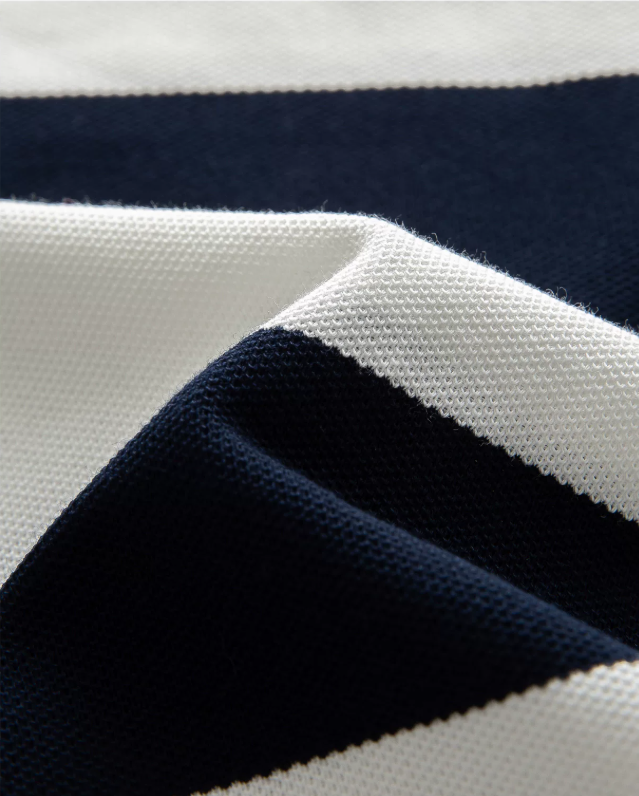
Sweaters are often discussed as though they are cut-and-sew garments with fabric shrinkage as the only size-risk variable. Knit panels behave differently. Width, length, shaping and recovery are all connected to the knitted structure and finishing process.
The finished measurement chart should identify the measurement method, point of measure, tolerance and condition of the garment during measurement. It should also state whether measurements are taken relaxed, lightly stretched or otherwise conditioned. This is especially important for rib trims and stretch-sensitive constructions.
At minimum, a sweater specification should cover the following points where relevant:
| Area | What the brand should define |
|---|---|
| Chest/body width | Finished point of measure, fit intent and measurement condition |
| Body length | Start and end points for measurement; expected hem behavior |
| Shoulder | Standard, dropped or shaped shoulder construction |
| Sleeve | Length, bicep width, cuff opening and sleeve-head construction |
| Neck opening | Shape, rib construction, depth and stretch expectation |
| Hem and cuff | Rib type, height, recovery expectation and finishing appearance |
| Armhole | Shape and mobility requirement, especially across graded sizes |
For extended sizing, grading deserves its own review. Increasing all dimensions uniformly can distort shoulder balance, sleeve length, armhole depth and body proportion. The size set should be evaluated as a family of garments, not as one approved base size with mathematical expansion.
Garment weight and drape should be approved as references

A finished-garment weight can be useful for internal comparison, freight planning and continuity across reorders. But it should be treated as a reference tied to a defined size, yarn, construction and finish—not as the sole pass/fail measure.
For example, a brand can record the approved sample’s size, finished weight, body dimensions and finishing state. If a future sample feels different, the development team can compare the whole package: Is the yarn different? Has stitch density changed? Are panels wider? Is the garment longer? Has brushing or washing changed the surface and loft?
Drape should be approved visually and physically. Lay the sweater flat, hang it on the intended hanger, place it on a fit model or mannequin, and assess the behavior at the shoulder, neckline, sleeve, hem and side seams. For a relaxed body, confirm that the garment falls as intended rather than twisting, pulling or developing an unwanted flare. For a more structured design, confirm that the knit holds its intended outline.
Sample approval checklist for sweater development
Use a written approval sheet for every sample iteration. The following is an operational development checklist, not a substitute for a brand’s legal, labeling or market-compliance review.
- Confirm style name, revision number, sample size and colorway.
- Confirm yarn composition, full yarn-count notation, ply or ends, and proposed machine gauge.
- Identify the body stitch, neck/cuff/hem stitch and any texture or shaping details.
- Compare finished points of measure with the approved measurement chart.
- Review the garment relaxed and, where relevant, lightly stretched.
- Check shoulder position, sleeve balance, neck opening, armhole comfort and hem behavior on the intended body type.
- Review drape on a hanger and during wear.
- Inspect linking, seam appearance, rib transitions, loose ends, holes and symmetry.
- Review labels, size labels, wash-care content, country-of-origin requirements and private-label packaging against the brand’s approved artwork and market obligations.
- Record every approved change in the tech pack or sample comments; avoid relying on chat messages alone.
A clear approval is more valuable than a vague “looks good.” If a point is still under review, mark it as open rather than allowing it to become an assumed bulk instruction.
What to lock before bulk production
The pre-production approval should establish the version that bulk production follows. Brands should approve a representative sample in the intended yarn, construction, color, finish and size before treating it as a bulk reference.
The bulk handoff should include:
- Final tech pack and revision-controlled measurement chart
- Approved yarn and color reference
- Machine gauge and knit-construction description
- Stitch-density or panel-control reference used by the development team
- Approved sample photos and physical sample identification, where retained
- Graded size set and fit comments
- Trim, label, hangtag and packaging artwork
- Embellishment placement and artwork, if applicable
- Inspection points and escalation contacts for material or measurement changes
Do not permit substitutions by implication. If a yarn, machine setting, trim or finish must change, request a written impact review and decide whether a revised sample is needed. A small input change can alter the silhouette or measurement behavior of a knitted garment.
Common approval mistakes that create bulk variance
The first mistake is treating gauge as a shorthand for quality. Gauge only describes part of the knitting setup. The product must still be judged against the approved hand feel, measurements, drape and workmanship.
The second is leaving yarn count without its count system, fiber content or ply construction. That invites interpretation rather than controlled sourcing.
The third is approving one size without looking at a graded size set. This is especially risky for products with drop shoulders, cropped lengths, extended proportions or XS–3XL size coverage.
The fourth is approving a sample before the relevant finish is applied. Surface finishing can change the visual density, softness, dimensions and overall appearance. A sample should represent the commercial product as closely as practical.
The fifth is using an unannotated photograph as the final standard. Photos are helpful reference tools, but they cannot reliably communicate stretch, recovery, hand feel, panel weight, interior workmanship or exact measurement method.
Questions to ask a sweater manufacturer before sampling
Ask direct questions that connect the design goal to a controlled development process:
- Which machine gauge and stitch construction do you recommend for this silhouette, and why?
- What full yarn specification will be used for the sample?
- Which dimensions are controlled at the panel stage, and which are confirmed after finishing?
- How will the team record the approved stitch density, yarn and finishing instructions for a reorder?
- Can the sample be reviewed as a graded size set when fit across sizes is important?
- What sample comments must be closed before pre-production approval?
- If a material or construction change becomes necessary, what approval step will occur before bulk release?
JUNSHEEN supports sweater and cardigan development within a broader OEM, ODM and private-label apparel workflow. For a sourcing discussion, send the intended silhouette, size range, reference images or sample, target yarn direction, decoration requirements and anticipated unit quantity through JUNSHEEN.
FAQ
Is a higher sweater gauge always lighter?
No. Gauge does not independently determine finished garment weight. Yarn construction, stitch density, stitch type, panel dimensions and finishing all contribute to the final result.
Can a brand specify only yarn count and let the factory choose the rest?
It can, but that leaves major appearance and fit decisions open. A stronger specification identifies the full yarn construction, desired hand feel, silhouette, stitch construction, measurement chart and sample-approval requirements.
Why can a sweater measure differently after finishing?
Knitted panels can respond to washing, drying, steaming, pressing and handling. Finished measurements should therefore be approved after the intended finishing process, using a defined measurement method.
What should be approved before bulk sweater production?
Approve the final sample, yarn and color reference, knit construction, finished measurement chart, graded size set where needed, trims, labels, packaging and written sample comments. Any unresolved change should be documented before bulk release.
Sources
No external research sources were used. This article provides general manufacturing guidance and uses the supplied JUNSHEEN brand profile for brand-specific information.