
#rankmath
Title: Sweater Pilling Control for Custom Knitwear Buyers
Description: Assess sweater pilling risk through fiber, yarn, knit structure, finishing, lab testing and real-wear review before bulk production.
Keyword: sweater pilling control
#rankmath
Sweater Pilling Control: Fiber Choice, Knit Structure, Testing and Wear-Trial Review
Pilling is one of the most visible quality risks in custom sweaters. It can make a new garment look worn quickly, trigger customer complaints, and complicate reorders—even when the sweater’s color, fit, and hand feel were approved.
For fashion brands, streetwear labels, and wholesale buyers, sweater pilling control should not be treated as a single fabric-finish request. It is a development decision involving fiber identity, yarn construction, knit structure, finishing, test method, and actual wear review. The useful question is not whether a sweater is “anti-pilling.” It is whether its construction is appropriate for the intended use, and whether the approved sample has been evaluated in a way that reflects that use.
JUNSHEEN supports custom sweater and knitwear development through fabric sourcing, sampling, size-set fitting, bulk production, and quality inspection coordination. For wool-led programs, see Custom Wool / Merino Sweaters.
What pilling is—and why the garment context matters

Pills are small fiber balls that form when loose fiber ends migrate to the surface, become entangled through abrasion, and remain attached to the knit. Friction from sleeves, bags, seat belts, desks, outerwear layering, and repeated laundering can all expose a sweater’s tendency to pill.
A pilling-prone result is not automatically evidence of poor manufacturing. Some soft, hairy, brushed, lofty, or minimally twisted yarns are selected precisely because they create warmth, softness, or a particular visual character. Those choices can also increase surface fiber movement. The sourcing task is to define the acceptable tradeoff before development begins.
A lightweight fashion cardigan worn occasionally has different risk conditions from a school-uniform knit, a workwear layer, or a fleece-lined streetwear sweater intended for frequent washing. Approval criteria should reflect the product’s actual use, not a generic expectation that every knit must retain an unchanged surface indefinitely.
Start with material identity, not a vague fiber name

“Wool,” “cotton,” “cashmere,” and “polyester” are broad starting points, not complete pilling specifications. Buyers should ask for the fiber composition, yarn form, yarn count or specification used by the mill, and any relevant yarn treatment or finishing information available for the selected material.
Natural fibers and blends
Natural fibers can produce attractive, breathable, and tactile knitwear, but surface behavior varies substantially by fiber length, fineness, preparation, and yarn spinning. Softer or hairier yarns may create a fuller hand while also presenting more loose ends at the surface.
Blends require the same scrutiny. A blend may improve dimensional stability, recovery, cost control, warmth, or durability for a particular design, but it does not automatically solve pilling. In some constructions, stronger synthetic fibers can help pills remain attached rather than breaking away. That is why a composition label alone cannot predict the finished garment’s performance.
Man-made fibers and recycled-content options
Synthetic and regenerated fibers can be appropriate for sweaters when their hand feel, recovery, drape, warmth, and care requirements match the brief. For recycled-content options, request the same development information as for any other yarn: composition, appearance, hand feel, knit construction, and sample-level performance review.
Do not approve a fiber choice solely because it sounds premium, natural, recycled, or technical. Ask how it behaves in the intended gauge, stitch, silhouette, and finish.
What to request from the supplier or mill
Before selecting a material, ask for:
- Full fiber composition for the proposed yarn and any plating yarn.
- Yarn-spinning description where available, including whether the yarn is single or plied.
- Swatches or knit-downs in the actual proposed stitch and color direction.
- Notes on brushing, raising, washing, softening, or other surface finishes.
- Care-label assumptions used during sample development.
- Comparable sample garments when available, while treating them as visual references rather than proof of the new style’s performance.
Yarn construction changes the surface before knitting begins
Yarn structure strongly affects how readily fibers can work loose. A yarn with a more open, fuzzy, or low-twist character may support a soft and elevated hand, but it also places more fiber at the surface. A plied yarn can create a more stable-looking surface in some applications, though the final result still depends on fiber type, twist balance, stitch selection, and finishing.
This does not mean buyers should always specify the tightest or smoothest yarn possible. Excessively optimizing for a clean surface can alter softness, drape, stretch, or the intended fashion appearance. The right instruction is more specific: identify which characteristic has priority for the style, then evaluate the complete knit construction against that priority.
For example, a brushed, relaxed sweater should be approved with an understanding that its halo is part of the visual design. A fine-gauge, cleaner-surface crewneck intended for frequent office wear may justify a more conservative yarn and construction approach.
Knit structure and density determine abrasion exposure

A sweater is not simply fabric made from yarn. Stitch type, gauge, density, tension, and silhouette influence how the yarn is exposed in use.
Open versus compact constructions
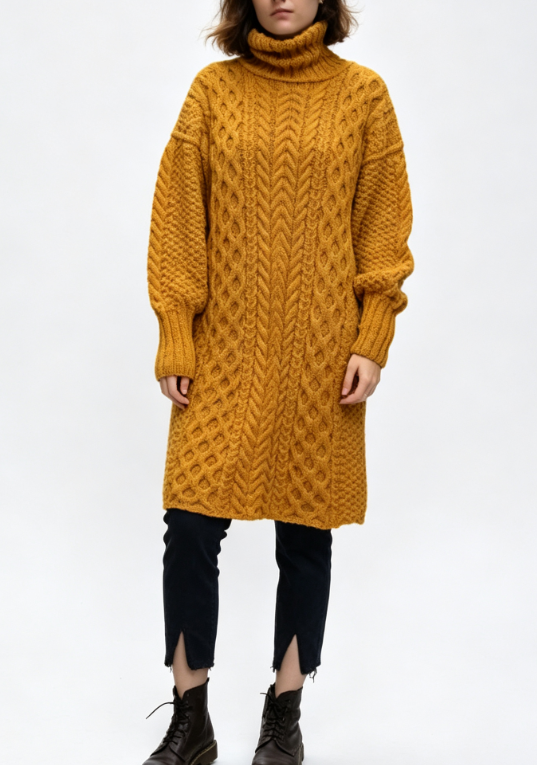
Open stitches, lace effects, loose gauges, and highly textured structures can expose more yarn surface and create more opportunities for snagging or abrasion. Compact constructions may restrain yarn movement more effectively, but they can also change weight, stretch, air permeability, and hand feel.
The development team should compare alternatives in the intended garment—not only as a flat swatch. Sleeve movement, side seams, armholes, shoulder construction, and rib transitions can create local friction points that a small knit-down does not reveal.
Texture, floats, and stitch placement
Cables, ribs, jacquards, tuck stitches, links-links effects, and other textures add visual value, but each needs a construction review. Long floats, raised loops, and abrupt transitions can be more vulnerable to catching and rubbing. Where a textured body is essential, consider whether high-contact zones such as underarms, cuffs, side panels, or bag-contact areas need a different stitch treatment.
Fit affects pilling exposure
Fit is a performance variable. A very close fit can increase rubbing at the underarm, side body, and elbow. An oversized silhouette can introduce abrasion from layering, bags, and folding at the sleeve or body. Review pilling risk alongside ease, shoulder balance, sleeve length, and intended styling.
This is particularly important across extended sizing. A pattern should be assessed through graded size sets so the garment retains intended proportions and does not create avoidable stress or friction points at different sizes.
Finishing can improve the surface—but it should be evaluated, not assumed
Finishing may include washing, softening, brushing, napping, shearing, or an anti-pilling treatment. These processes can change the hand, appearance, and surface behavior of a knit. They can also introduce tradeoffs, such as reduced loft, altered softness, shade variation, or a finish that changes after care cycles.
Treat “anti-pilling wash” as a development option, not a universal guarantee. The correct process depends on the yarn, dyeing route, stitch structure, garment finish, and the look the brand wants to preserve.
When approving a finish, compare an untreated reference and the proposed finished sample where possible. Review both before and after the planned care procedure. Confirm that the hand, dimensions, color appearance, trim compatibility, and embellishments remain acceptable alongside the surface result.
Choose a knitwear pilling test that matches the approval decision
A knitwear pilling test can provide a repeatable comparison between development options, but test results need context. Different test methods use different abrasion mechanisms, sample preparation, evaluation approaches, and endpoints. A result from one method should not be casually compared with a result from another method.
Before testing, align the following in writing:
| Approval question | What to define |
|---|---|
| Test purpose | Material screening, sample approval, bulk verification, or investigation of a complaint |
| Test method | The named method and the version required by the brand, retailer, or program |
| Sample state | Unwashed, washed, finished, garment-dyed, brushed, or otherwise conditioned state |
| Care process | The agreed laundering and drying procedure before testing, if applicable |
| Rating process | Who evaluates appearance, what reference standard is used, and how disagreements are resolved |
| Acceptance rule | The agreed threshold or comparative approval decision for this specific program |
A test should be ordered against the actual proposed construction whenever practical. A mill test on a related yarn or a different knit structure can inform material selection, but it does not replace testing the final development fabric or garment component.
If a retailer, customer, or internal quality manual names a required method or threshold, treat that document as the governing requirement. If no requirement exists, brands should establish a written approval rule before sample testing rather than negotiating the result after it arrives.
Wear trials catch issues that lab screening may miss
Laboratory abrasion assessment is useful, but it cannot fully reproduce every real-use condition. Wear trials add value because they reveal how a sweater behaves with movement, styling, layering, laundering, and contact with everyday objects.
A practical wear trial does not need to be elaborate. It needs to be controlled enough to create usable feedback.
Wear-trial review points
Provide reviewers with the same sample version and written care instructions. Ask them to record:
- Where surface change appears first: underarm, elbow, cuff, side body, front torso, back, or bag-contact area.
- Whether the change is loose fuzz, attached pills, snagging, flattening, or another visual issue.
- What the garment was worn with, including outerwear and bags.
- Whether the sweater was machine-washed, hand-washed, dried flat, tumble-dried, or handled another way.
- Whether the change is visible at normal viewing distance and whether it affects saleable appearance.
- Whether reviewers consider the result consistent with the garment’s intended price position and use case.
Avoid treating one person’s subjective reaction as the final decision. Consolidate comments, photograph the same zones under consistent lighting, and compare the sample with its pre-wear condition.
Sample approval checklist for pilling-risk control
Use this checklist in the pre-production approval record:
- Confirm the approved fiber composition and yarn reference.
- Identify the approved knit gauge, stitch map, density, and rib specifications.
- Match the approved colorway, because color and finishing can affect visual assessment.
- Confirm the exact wash, brush, napping, shearing, or anti-pilling finish, if any.
- Review high-friction zones on a worn garment, not only on a laid-flat sample.
- Define the care process used for approval and ensure it aligns with the intended care label.
- Record the selected knitwear pilling test method when testing is part of the program.
- Document the acceptance decision, including any acceptable fashion-character surface change.
- Keep an approved physical sample and clear photographs as the production reference.
Bulk-production controls worth documenting
Bulk consistency depends on preserving the approved construction, not simply reproducing the garment’s color and measurements. The bulk record should identify the approved yarn source or specification, knit settings, stitch structure, finishing route, approved sample reference, and inspection focus areas.
During production, compare first-off and production-stage garments with the approved standard. Review surface uniformity, hand feel, visible hairiness, stitch definition, rib recovery, and any localized abrasion-prone details. If a material or finish change is proposed, pause and obtain written approval before treating it as equivalent.
For private-label programs, also confirm that wash-care labels reflect the approved care approach. Poor care communication can create avoidable customer dissatisfaction, particularly for delicate, brushed, or specialty knit constructions.
Questions to include in a sweater RFQ
An effective inquiry gives the development team enough information to recommend suitable options. Include:
- Target silhouette, intended wearer, and whether the fit is regular, relaxed, boxy, or oversized.
- Proposed fiber composition, or the hand feel and performance priorities if material is still open.
- Knit gauge, stitch reference, texture, jacquard artwork, and any brushing or napping intent.
- Expected use: occasional fashion wear, regular casual use, uniforms, layering, or another application.
- Required test method or retailer quality manual, if one exists.
- Intended care instructions and any wash-treatment requirements.
- Size range and graded fit expectations.
- Requested sample quantities, bulk quantity, colorways, private-label trims, and packaging needs.
JUNSHEEN offers OEM, ODM, and private-label development for sweaters and other knitwear, with development support across sourcing, sampling, graded sizing, and bulk coordination. Its stated MOQ begins at 100 units per style/color, subject to fabric and craft complexity. Send an inquiry with your tech pack, reference sample, or concept to discuss a pilling-control plan before sampling.
FAQ
Can a supplier guarantee that a sweater will never pill?
No responsible development process should frame pilling as an absolute promise. The appropriate goal is to select and validate a construction that meets the agreed appearance standard for the intended use.
Is a higher synthetic-fiber percentage automatically better for pilling?
No. Composition alone does not determine the outcome. Fiber properties, yarn structure, stitch construction, density, finishing, and wear conditions must be considered together.
Should testing happen before or after washing?
That depends on the program requirement and approval question. Define the sample state and care process before testing so the result can be interpreted consistently.
Is a wear trial necessary if the sample passes a lab test?
It is often useful for buyer confidence, especially for new materials, textured knits, brushed surfaces, high-contact styles, or products expected to be worn and washed frequently. It complements, rather than replaces, a defined test program.
Sources
No external research sources were used. This article provides general development guidance and uses the supplied JUNSHEEN brand profile for company-specific information.