#rankmath
Title: Sweatshirt Ribbing Specification for Cuffs and Collars
Description: Specify sweatshirt ribbing with clear decisions on composition, stretch, recovery, cuff balance, seams, laundering, sample approval and bulk control.
Keyword: sweatshirt ribbing specification
#rankmath
Sweatshirt Ribbing Specification: Recovery, Stretch, Cuff Balance and Bulk Approval
Ribbing is a functional component of a sweatshirt, not a finishing detail to settle at the end of development. The collar, cuffs and waistband determine how the garment returns after wear, how it sits on the body, whether sleeves stack cleanly, and whether an oversized silhouette still looks intentional after laundering.
A usable sweatshirt ribbing specification connects the rib fabric to the body fabric, pattern measurements, seam construction and wash process. It also gives the factory a clear approval standard before bulk cutting begins. For brands developing Custom Sweatshirts & Crewnecks Manufacturer programs, the goal is not simply “tight rib” or “soft rib.” It is a repeatable balance of stretch, recovery, visual proportion and comfort.
Start with the job each rib component must do

A sweatshirt usually uses rib at the neckline, sleeve cuffs and waistband. These locations can share one rib construction, but they do not always need the same finished circumference or visual depth.
- The neckline must pass over the head while returning close enough to the neck opening to avoid a loose, distorted appearance.
- A sweatshirt cuff rib should hold the sleeve in place without creating an abrupt, restrictive grip around the wrist.
- The waistband must support the body shape, especially on relaxed and boxy fits, without pulling the hem upward or collapsing into a wavy edge.
Write the intended garment behavior into the tech pack. For example: “relaxed cuff with controlled return,” “high-recovery collar with a clean crewneck opening,” or “straight oversized body with waistband that does not draw in the hem.” These are development directions, not universal standards, but they help pattern, sourcing and sample teams evaluate the same result.
Specify rib composition with the body fabric in mind

Composition affects hand feel, visual texture, stretch behavior, color response and laundering compatibility. Rather than selecting rib only by color, ask the supplier to identify the construction and fiber content of the proposed rib and explain how it will be matched to the sweatshirt shell.
Cotton-rich rib can suit a natural hand and a classic fleece or French terry program. Blended rib may be considered when the design calls for more elastic return or a different surface character. The correct choice depends on the target silhouette and the approved sample; composition alone does not guarantee recovery.
For a ribbing specification, record:
| Specification area | What to state in the tech pack or approval notes |
|---|---|
| Fiber content | The proposed fiber blend for the rib, separately from the body fabric |
| Knit construction | Rib type, wale appearance, surface texture and intended visual match |
| Color | Approved lab dip or physical swatch reference, including whether an intentional contrast is allowed |
| Hand feel | Soft, firm, dry, brushed, compact or another buyer-approved description |
| Stretch direction | Where the rib must extend in the finished component |
| Recovery expectation | The approved appearance after extension and relaxation, assessed against the sealed sample |
| Attachment | Seam type, stitch appearance, seam allowance and any topstitch requirement |
| Wash process | The intended laundering or garment-treatment sequence used for approval |
Do not assume a body fabric and a rib will react identically in washing simply because they are similar in color or fiber description. Review them together in the finished sample. A rib that looks stable before washing can look comparatively loose, tight, twisted or color-shifted after the shell fabric changes.
Define stretch and recovery as sample-approval criteria

Stretch is the ability to extend. Recovery is the ability to return toward the intended shape after extension. Buyers often focus on the first because it is easy to feel by hand, but recovery is usually the more important approval question for collars, cuffs and waistbands.
Avoid an unmeasurable instruction such as “good elasticity.” Instead, approve a physical reference and describe the conditions under which it will be assessed. The reference should be the complete garment after the intended wash treatment, not an unwashed rib cutting alone.
During sample review, examine the rib in three states:
- At rest, laid flat after the garment has relaxed.
- Stretched as it would be during wear, including opening the neck and pulling the cuff over a hand.
- Released and observed again after a short rest period.
Look for persistent rippling, a neckline that remains expanded, cuff edges that flare, uneven wale alignment, or a waistband that loses its intended relationship to the body. These are approval observations, not a substitute for a mutually agreed test method. If your brand needs formal performance testing, define the applicable method, conditioning, sample quantity and pass/fail requirement with the supplier before bulk production.
Set circumference and rib depth by silhouette, not habit

The cut circumference of a rib component is deliberately different from the circumference of the edge it joins. That relationship creates the draw-in effect. It should be set through pattern development and confirmed on the finished sample, rather than copied from an unrelated sweatshirt.
A close-fitting classic crewneck generally needs a more controlled collar relationship than a wide, relaxed streetwear crewneck. Likewise, a fitted cuff and a long, slouchy cuff can both be appropriate, but they need different rib depth and sleeve balance.
For each size in the graded size set, include separate points of measure for:
- Neck opening and finished collar height.
- Cuff opening, cuff height and sleeve length measured with the cuff attached.
- Finished hem opening and waistband height.
- Body sweep immediately above the waistband.
- Any intended differential between left and right sleeves, if the design has asymmetry.
For oversized styles, assess the full proportion. A narrow waistband on a broad, drop-shoulder body may create an unwanted balloon effect. A very loose waistband can erase the shape that keeps a relaxed body looking finished. The right answer is the one that matches the approved fit intent across the size range.
Build cuff balance into sleeve development

A sweatshirt cuff rib changes the visible and functional sleeve length. It also affects how the sleeve hangs at the wrist. If the cuff is deeper, firmer or more gathered than the development sample, the sleeve can appear shorter even when the sleeve pattern length has not changed.
Review cuffs on a fit model with normal arm movement. Check whether the cuff rotates, whether the sleeve seam twists toward the front or back, and whether the gathered sleeve volume is distributed evenly around the cuff. Compare both sleeves; small construction differences are especially visible at the wrist.
For extended-size and plus-size programs, do not treat cuff grading as a simple afterthought. The finished opening, cuff height and sleeve volume should be reviewed with the garment’s intended ease and mobility. JUNSHEEN supports fit-focused development and graded size sets from XS through 3XL, so brands can include rib balance in their broader fit review rather than approving only a base size.
Control seam construction and wale alignment
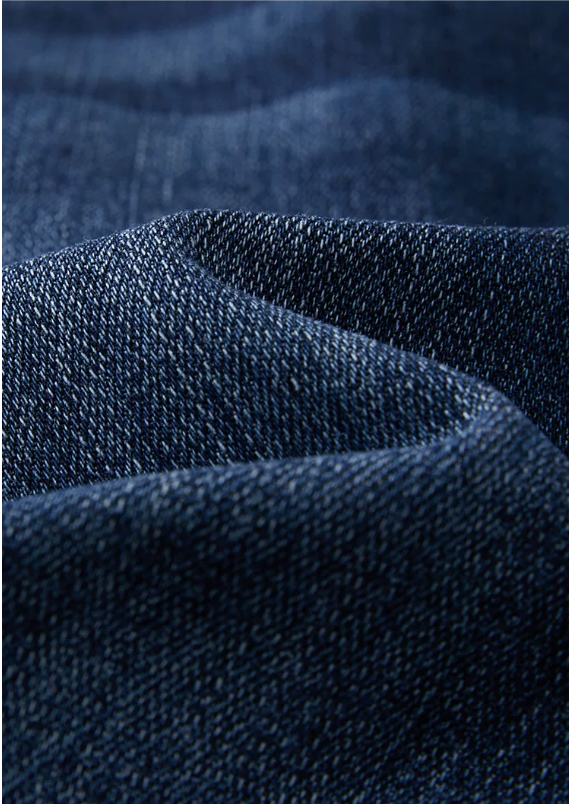
Ribbing can appear uneven even when the fabric itself is acceptable. Cutting direction, joining accuracy and stitch tension affect the final result.
Your specification should identify:
- Whether the rib is cut so the visible wales run vertically in the finished cuff, collar and waistband.
- The joining seam and whether the seam should be pressed toward the body, toward the rib or finished in another approved way.
- The placement of the rib join seam, such as at center back neck or an underarm position.
- Whether seam intersections must align with shoulder, side-seam or underarm construction.
- The acceptable appearance of stretch seams when the garment is relaxed.
At the collar, confirm that the join seam is neat and that the neck seam does not create a bulky point. At cuffs and waistbands, inspect the join seam after washing and after the rib is gently stretched. A seam that is visually acceptable flat on the table may pucker or torque in wear.
Approve laundering as part of the rib specification
Laundering changes the relationship between shell and rib. This matters for garment dye, enzyme wash, acid wash, brushing, napping and other treatments, but it also matters for an ordinary wash program. The approval sample should reflect the actual intended sequence: construction, embellishment where applicable, wash treatment, drying and final finishing.
Ask the development team to retain a clear sample record that identifies the shell fabric, rib, trim lot, wash process and measurement sheet. If an approved rib is later unavailable, require a replacement submission rather than allowing an unreviewed substitution based only on color or stated composition.
Sample-approval checklist for sweatshirt ribbing
Use this checklist at the pre-production stage:
- Confirm the rib swatch is the approved construction, color and hand feel.
- Compare the finished garment to the approved measurement specification after the intended wash process.
- Review neckline shape while flat, worn and after it has been pulled over the head.
- Check cuff openings, cuff depth, sleeve stacking and wrist comfort during normal movement.
- Check whether the waistband creates the intended body shape on the fit model.
- Inspect wale direction, join seams, seam bulk, puckering and stitch consistency.
- Compare left and right cuffs for symmetry.
- Review the garment in all approved sizes or, at minimum, the agreed size-set samples before releasing grading.
- Record photos, comments and a clear disposition: approved, approved with corrections, or resubmit.
A sample is not bulk approval unless the brand has confirmed the specific materials, construction and finish being used as the bulk reference.
Buyer guide: questions to include in the RFQ
A complete RFQ helps a supplier quote and develop the right rib instead of making assumptions. Include the following information when requesting a custom sweatshirt program from JUNSHEEN:
| RFQ question | Why it matters |
|---|---|
| What is the intended fit: regular, relaxed, boxy or oversized? | Rib circumference and depth must support the silhouette. |
| Is the sweatshirt fleece, French terry or another shell fabric? | The rib must be reviewed against the shell’s weight, hand and wash behavior. |
| Should cuffs and waistband draw in visibly or remain nearly straight? | This determines the desired balance between body circumference and rib circumference. |
| Is the collar close, standard or wide? | Neck opening and collar behavior need separate approval. |
| Will the garment receive a wash treatment or garment dye? | The finished sample must reflect the intended process. |
| Which sizes will be produced? | Rib measurements and grading need review across the size range. |
| Are there reference garments or approved samples? | They establish a visual and tactile benchmark. |
| What must be approved before bulk cutting? | This prevents a material or construction decision from remaining implicit. |
Red flags before bulk release
Pause for clarification if the supplier cannot identify the rib construction or fiber content, if the sample uses a different rib than the proposed bulk material, or if wash approval is based on an unfinished garment. Also flag vague notes such as “same as sample” when the sample version, wash sequence or final measurement sheet is not identified.
Be cautious when a waistband looks acceptable only when the garment is laid flat. Try it on. The hem relationship, sleeve balance and collar return should be approved in wear as well as on the inspection table.
Bulk-production control checklist
Before bulk production, issue one controlled approval package containing:
- Signed measurement specification by size.
- Sealed or clearly identified pre-production sample.
- Approved shell and rib swatches, with color references.
- Construction page showing collar, cuff and waistband seam details.
- Wash and finish instructions tied to the approved sample.
- Artwork and embellishment placement details if applicable.
- Tolerance policy and inspection points agreed with the supplier.
- Written procedure for proposed substitutions, rework decisions and approval escalation.
During production, compare early finished units to the approved pre-production sample. Review the neckline, cuffs and waistband after the actual finishing process, not only at the sewing line. Retain the approved pattern, graded size set and fabric records for repeat orders so that a successful rib specification is not recreated from memory.
FAQ
Should cuffs, collar and waistband use the same rib?
They can, but they do not have to use the same finished dimensions. Their pattern relationships should reflect their different jobs on the garment.
Is a tighter rib always better for recovery?
No. A tighter component may look more controlled but can reduce comfort, distort the silhouette or create excessive gathering. Approve recovery and balance on the finished garment.
When should ribbing be approved?
Approve it with the finished sample after the intended wash and finishing sequence. Confirm it again in the pre-production sample before bulk release.
What should a buyer send with a sweatshirt ribbing specification?
Provide the target fit, size range, shell-fabric direction, rib reference or swatch, required measurements, construction details, wash treatment and approval criteria.
Request a sweatshirt development review
JUNSHEEN provides OEM, ODM and private-label apparel development, including fabric and trim sourcing, pattern development, sampling, graded size sets and bulk-production coordination. Send your tech pack, reference garment or concept with the target fit, size range and ribbing direction to begin an inquiry. For a sweatshirt program, include your required collar, cuff and waistband behavior from the first sample round so those components are developed as part of the fit, not corrected after bulk planning.
Sources
No external research sources were used. Brand capability statements are based on the supplied JUNSHEEN brand profile.